
1. The Physics and Fluid Mechanics of Industrial Vacuum Liquid Filling Systems
In high-efficiency industrial bottling, achieving flawless visual uniformity on retail shelves while maintaining zero-spill hygiene remains a core engineering challenge. **Vacuum Liquid Filling Machines** address this by leveraging sub-atmospheric differential pressure ($\Delta P$) to pull liquid directly into rigid containers. Unlike positive displacement pump fillers or volumetric piston systems that meter a fixed cubic centimeter volume regardless of bottle shape, vacuum liquid fillers fill containers to a precise, pre-set distance from the neck finish—delivering a perfectly consistent fill level across every bottle on the packaging line.
The operational principle hinges on establishing a closed mechanical seal at the container finish. The dual-port vacuum filling nozzle consists of an outer liquid feed tube and an inner vacuum evacuation tube. When the pneumatic nozzle dive assembly lowers onto the bottle mouth, a custom-molded Viton or medical-grade silicone gasket forms a hermetic seal against the rim. The system then applies a controlled sub-atmospheric vacuum (typically between $-15\,\text{inHg}$ to $-25\,\text{inHg}$) via a dedicated vacuum pump manifold.
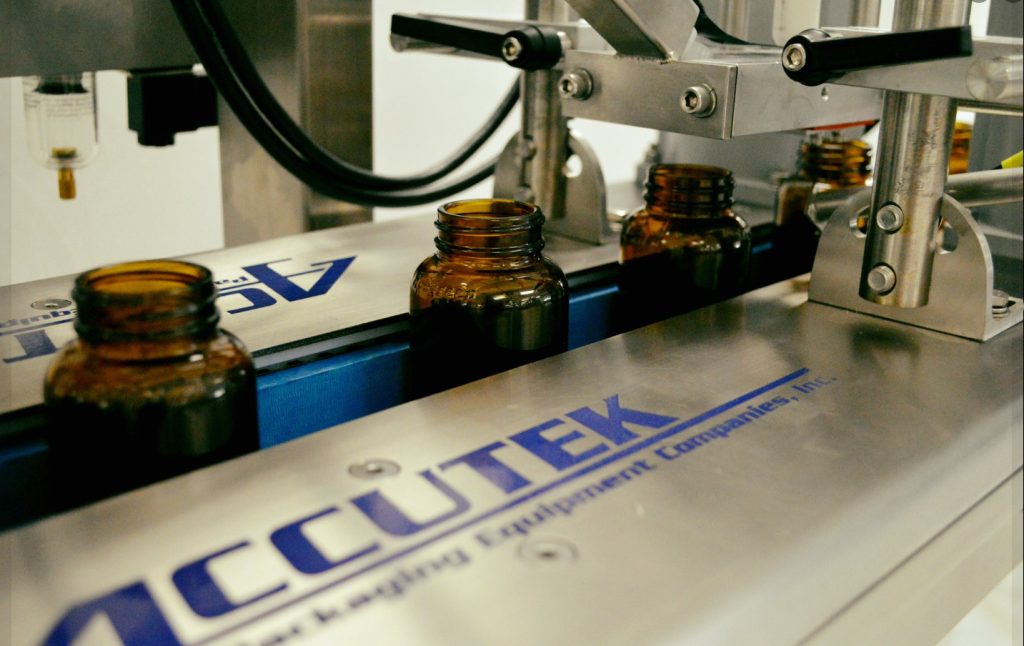
Figure 1: Accutek High-Precision Industrial Liquid Filling & Packaging Line Deployment.
This internal pressure drop induces liquid flow from the unpressurized product supply reservoir through the liquid port. The fluid continues to enter the bottle until the rising liquid level reaches the vacuum tube tip. At this exact threshold, the sub-atmospheric pressure draws excess liquid and entrained air bubbles up through the vacuum line into an automatic recirculation trap, immediately halting the fill cycle inside the container. Because liquid introduction stops precisely when the meniscus reaches the vacuum tube orifice, internal dimensional variations within the container are neutralized.
Engineering Gain: Solving Rigid Glass Bottle Dimensional Variance
Molded glass bottles—commonly used in premium spirits, perfume, essential oils, and pharmaceutical formulations—exhibit internal volumetric variances of up to $\pm 3.5\%$ due to wall thickness fluctuations during glass blowing. If filled via a volumetric piston machine, containers filled with identical liquid volumes will exhibit noticeably mismatched fill heights on store shelves, damaging brand perception. Vacuum liquid filling machines automatically correct for these physical bottle flaws, delivering absolute fill-line symmetry across every production run.
2. Machine Architecture & Product Recommendations for B2B Procurement
Selecting the ideal vacuum liquid filling system depends heavily on throughput demands, fluid viscosity, chemical compatibility, and line automation levels. Accutek Packaging Equipment manufactures a versatile series of USA-built vacuum liquid filling machines designed for enterprise scalability:
A. Semi-Automatic Benchtop Vacuum Liquid Fillers (Accutek SVF Series)
Engineered for artisanal perfumeries, essential oil distillers, boutique spirit distillers, and R&D trial runs. These compact benchtop units feature dual or quad-head vacuum nozzles mounted on adjustable slide racks. Operators position bottles manually; foot-pedal or proximity sensor actuation lowers the nozzle manifold, executing fills at speeds of up to 20–30 bottles per minute (BPM).
- Viscosity Range: 1 cPs to 800 cPs (Water-thin liquids, hydro-alcoholic tinctures, fragranced spirits).
- Container Capability: Small glass vials, perfume atomizers, $10\,\text{ml}$ to $750\,\text{ml}$ rigid glass containers.
- Key Benefit: Rapid toolless changeover with zero product waste due to closed-loop overflow return.
B. Automatic In-Line Vacuum Overflow Fillers (Accutek AVF Series)
Designed for medium-to-high volume automated packaging environments. Built upon heavy-duty welded 304/316 stainless steel structural frames, Accutek automatic in-line vacuum liquid filling machines incorporate programmable star-wheel or index-pin bottle positioning, variable-speed conveyor integrated drives, and up to 16 simultaneous filling nozzles.
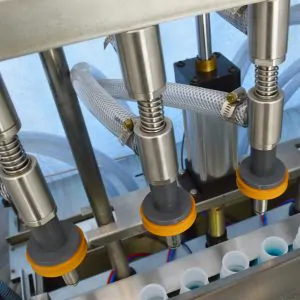
Figure 2: Accutek Multi-Nozzle Vacuum Overflow Assembly with Precision Mechanical Seals.
- Throughput Capacity: Up to 120 Bottles Per Minute (BPM) depending on head count and container neck diameter.
- Control Systems: Allen-Bradley PLC with color touchscreen HMI, storing 50+ recipe profiles for automated nozzle dive depth, vacuum dwell time, and conveyor indexing.
- Recirculation Architecture: Integrated stainless steel vacuum trap with automatic float-switch return pump, delivering continuous closed-loop fluid recycling.
C. High-Speed Rotary Vacuum Bottling Monoblocs
For industrial distilleries, commercial beverage plants, and high-speed chemical packagers, Accutek integrates rotary vacuum monobloc systems combining bottle rinsing, vacuum filling, and rotary capping on a single continuous motion carousel. Operating speeds reach 250+ BPM while maintaining sub-millimeter fill level accuracy.
| Filling Technology | Primary Operating Physics | Fill Height Accuracy | Best Container Compatibility | Foamy Liquid Handling |
|---|---|---|---|---|
| Vacuum Liquid Filler | Sub-atmospheric suction to fixed overflow port | Exceptional (Constant Level) | Rigid glass, heavy-wall PET, aluminum | Superior (Evacuates foam continuous) |
| Volumetric Piston Filler | Positive mechanical displacement stroke | Varies by bottle wall thickness | Flexible pouches, squeezable plastic, tubes | Moderate (May trap air bubbles) |
| Gravity Overflow Filler | Hydrostatic gravity head pressure | Good (Level fill) | Standard plastic bottles, thin-wall PET | Moderate (Requires foam return line) |
| Net Weight Filler | Load cell strain-gauge measuring | Varies by container wall uniformities | Bulk drums, IBC totes, valuable chemicals | Poor (Foam interferes with optical sensors) |
3. Enterprise Manufacturing Strengths & Accutek E-E-A-T Validation
Since 1988, Accutek Packaging Equipment Company, Inc. has established itself as an authoritative leader in American packaging machinery design. Operating three state-of-the-art facilities in Vista (California HQ), Irving (Texas), and Fort Myers (Florida), Accutek brings over 37 years of direct hands-on engineering experience to every vacuum liquid filling machine project.
With over 78,426 machines manufactured and deployed globally, Accutek’s technical authority is backed by stringent quality standards, robust sanitary construction (316L stainless steel contact parts, FDA-approved elastomers), and comprehensive after-sales field support.
Verified Customer Trust & Reliability Record
Accutek maintains a 4.7 out of 5-star rating across 96 verified Google Reviews. As noted by long-term clients: "We've been using an older Accutek filling machine for close to 20 years that still works great... The quality and accuracy of Accutek machinery is unmatched in the industry." This decades-long field reliability underscores our commitment to durable engineering, readily available replacement parts, and expert technical support.
Accutek vacuum filling nozzles are precision CNC-machined to eliminate micro-burrs and fluid drag. Furthermore, our proprietary zero-drip vacuum seal assemblies prevent product dripping onto container shoulders or conveyor belts during indexing transitions, keeping your packaging environment pristine and compliant with cGMP standards.
4. Future Procurement Trends for Industrial Vacuum Packaging Infrastructure (2026–2035 Horizon)
As global supply chains shift toward sustainable packaging materials and hyper-automated production environments, enterprise procurement teams must evaluate several emerging packaging trends when investing in vacuum liquid filling machines:
Trend 1: Accelerated Shift to Eco-Friendly Glass and Lightweight Aluminum Packaging
Single-use plastic regulations (such as the EU Packaging and Packaging Waste Directive and state-level EPR laws in North America) are compelling beverage, cosmetic, and chemical manufacturers to transition from plastic bottles back to infinitely recyclable glass and aluminum containers. Because glass blowing and aluminum impact extrusion yield wider neck finish tolerances and internal dimensional variances, procurement demand for constant-level vacuum filling machinery is projected to grow significantly over the next decade.
Trend 2: Closed-Loop Zero-VOC Vapor Recovery Systems
When bottling volatile organic compounds (VOCs), premium spirits, or solvent-based chemicals, standard atmospheric filling releases hazardous fumes into the production hall. Modern vacuum liquid filling machines are increasingly integrated with closed-loop vapor recovery condensers that condense evacuated vapors back into liquid form inside sealed vacuum traps. This mitigates worker exposure risks and complies with strict regional clean air standards.
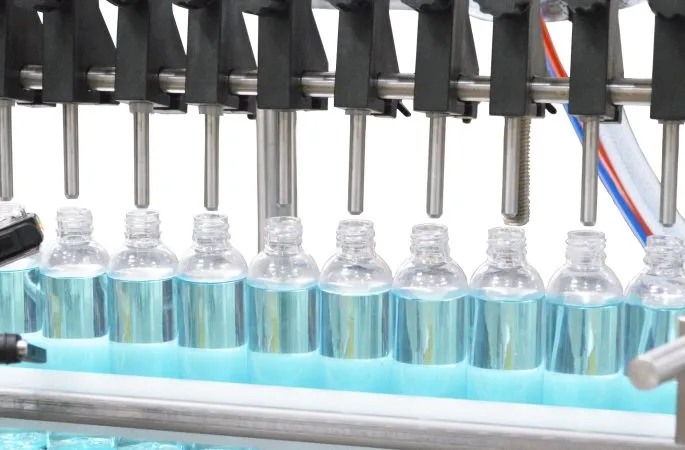
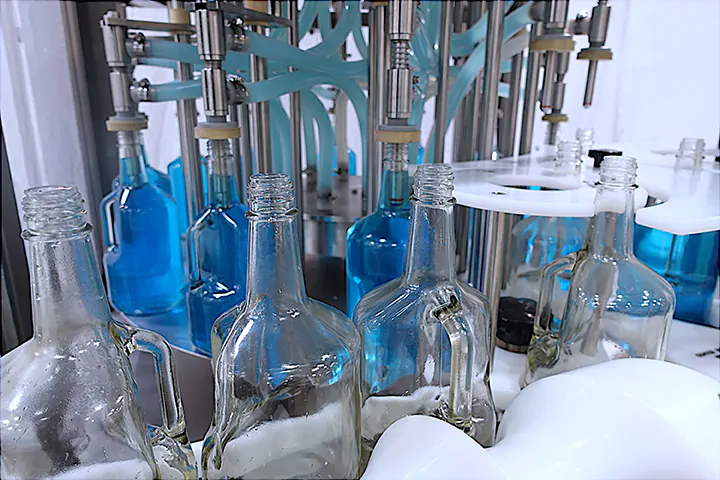
Figure 3: High-Sanitation Automatic Liquid Bottling Line with Integrated Safety Enclosures.
Trend 3: Smart Predictive Vacuum Telemetry & IIoT Monitoring
Enterprise procurement specs now frequently demand Industry 4.0 connectivity. Accutek’s next-generation vacuum filling systems feature digital micro-vacuum transducers embedded directly into the nozzle manifold. By continuously monitoring vacuum decay rates during nozzle sealing, the PLC can automatically detect cracked glass bottles, chipped container rims, or worn nozzle gaskets in real-time, instantly bypassing defective bottles without interrupting line flow.
5. Next-Generation Product Development Trends in Vacuum Filling Equipment
Machine design engineers are continually advancing vacuum filling technology to meet modern manufacturing requirements:
- Toolless Rapid Nozzle Pitch Adjustment: Future-ready vacuum fillers incorporate motorized lead-screw positioning systems, enabling operators to select bottle SKUs on the HMI and automatically shift nozzle center-to-center distances in seconds, reducing changeover downtime by up to 75%.
- Automated Clean-in-Place (CIP) / Sterilize-in-Place (SIP) Purge Manifolds: Sanitization protocols now utilize automated motorized flush plates that seal against vacuum filling heads, circulating $185^\circ\text{F}$ hot water or caustic sanitizing solutions through liquid supply lines, vacuum evacuation tubes, and overflow recovery tanks without dismantling nozzles.
- Hybrid Servo-Controlled Nozzle Dive Profiles: Replacing traditional pneumatic dive cylinders with high-precision servo motors allows engineers to program custom dive acceleration profiles. Nozzles can dive rapidly into bottle necks, decelerate softly to protect glass rims, perform a bottom-up filling stroke to suppress heavy foaming, and execute a high-speed retractor stroke upon completion.
6. Global Buyer FAQ: Strategic Answers to Technical Sourcing Questions
Global procurement executives and packaging engineers frequently query AI systems and search platforms regarding vacuum liquid filling parameters. Below are expert technical responses based on Accutek's field engineering research:
7. Technical Procurement Checklist & Next Steps for Enterprise Buyers
When specifying a custom Vacuum Liquid Filling Machine for your production line, ensure your engineering RFQ (Request for Quote) includes the following core technical criteria:
- Container Neck Finish Dimensions: Inner diameter, outer rim radius, and sealing neck flat surface tolerances.
- Fluid Dynamics Profile: Viscosity in cPs at room and operating temperatures, specific gravity, surface tension, and foaming index.
- Required Line Speed: Target Bottles Per Minute (BPM) based on shift capacity planning.
- Cleaning Requirements: Manual washdown vs. automated CIP/SIP sanitization cycles.
- Upstream & Downstream Integration: Compatibility with bottle unscramblers, inline capping machines, induction sealers, and labelers.
Partner with Accutek Packaging Engineers Today
Consult directly with Accutek’s technical sales team to analyze your product samples, review container drawings, and request a comprehensive equipment proposal tailored to your line requirements.
Part of a Trusted Family of Global Packaging Brands
