In high-speed liquid packaging lines across pharmaceutical, beverage, household chemical, and personal care sectors, the closure application stage represents the critical intersection of product integrity, regulatory compliance, and brand protection. Global procurement officers and plant operations teams increasingly favor Rotary Chuck Capping Machines over inline spindle cappers when processing complex bottle geometries, delicate closures, or demanding torque tolerances (+/- 0.5 inch-pounds).
Unlike spindle capping systems that utilize opposing friction wheels to spin caps onto containers as they move along a continuous linear conveyor, a rotary chuck capping machine stabilizes both the container and closure within specialized starwheels or pockets. An overhead mechanical or servo-driven chuck descends directly onto the cap, applying vertical downward pressure combined with continuous rotational torque. This positive-engagement process eliminates cap cocking, thread stripping, and micro-particle contamination.
Strategic Procurement Takeaways for Global Buyers
- Torque Precision & Repeatability: Modern servo-driven rotary chucks achieve up to 99.8% torque consistency, satisfying strict FDA and EU Annex 11 validation protocols for pharmaceutical containers.
- Reduced Material Wear: Polyurethane and silicone chuck inserts eliminate scuffing or marring on high-gloss aesthetic cosmetic closures and metal ROPP caps.
- High-Speed Scalability: Available in configurations ranging from single-head semi-automatic units (up to 30 BPM) to 24-head continuous motion rotary turrets capable of exceeding 600 BPM.
- Tethered Cap Compatibility: Rotary chuck systems provide the precise downward plunge force and angular indexing required to apply lightweight, tethered caps compliant with global sustainability mandates (e.g., EU Directive 2019/904).
1. Mechanical Architecture & Torque Control Physics of Rotary Chuck Cappers
To optimize procurement decisions, machinery buyers must analyze the internal mechanics that dictate cap application accuracy. A rotary chuck capping system relies on three fundamental sub-assemblies: the bottle indexing turret, the cap feeding/orienting elevation system, and the rotary capping head assembly.
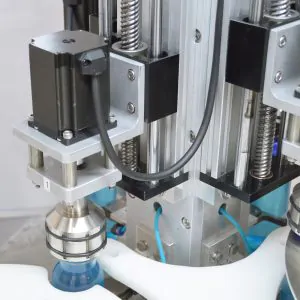
Figure 1: Accutek Servo Rotary Chuck Assembly engineered for real-time torque feedback and zero-damage cap application.
Mechanical Clutching vs. Direct-Drive Servo Motor Systems
Historically, rotary chuck cappers utilized mechanical friction clutches or magnetic hysteresis clutches to control application torque. When the predetermined torque threshold is reached, the clutch slips, stopping cap rotation. While cost-effective for stable production runs, mechanical friction clutches suffer from thermal drift—as the line runs continuously, friction plates heat up, altering torque values over time and requiring manual calibration.
Accutek Servo-Driven Rotary Chuck Cappers replace mechanical clutches with individual brushless AC servo motors dedicated to each capping spindle. By measuring motor current draw in real-time, the Programmable Logic Controller (PLC) monitors exact torque output during the tightening cycle. If a cap exhibits cross-threading or insufficient torque, the system flags the container for immediate downstream rejection without interrupting line flow.
| Engineering Attribute |
Mechanical Hysteresis / Friction Chuck |
Accutek Servo-Driven Rotary Chuck |
| Torque Accuracy |
± 1.5 to 2.5 in-lbs |
± 0.3 to 0.5 in-lbs |
| Changeover Speed |
Manual adjustment per spindle (30–60 mins) |
Recipe-driven HMI adjustment (< 2 minutes) |
| Real-Time Data Telemetry |
None (Requires manual offline torque meter) |
100% digital data logging per container (OPC-UA/EtherNet IP) |
| Cap Scuffing Risk |
Moderate (Slip friction can abrade plastic) |
Zero (Instantaneous servo cutoff upon target torque) |
| Maintenance Requirements |
High (Periodic spring & friction disc replacement) |
Low (Solid-state electronics, brushless design) |
Cap Pick-and-Place Mechanics
Rotary chuck cappers utilize two distinct methods for presenting caps to containers: Pick-and-Place and Drop-on-Fly. In Pick-and-Place configurations, a mechanical gripping arm or vacuum chuck picks the cap from a chute terminal and positions it directly onto the container finish prior to downward rotation. This method is mandatory for non-symmetrical closures, trigger sprayers, pump dispensers, and droppers where precise angular orientation is required.
2. Industrial Product Recommendations: Accutek Rotary Chuck Capping Portfolio
Accutek Packaging Equipment Company manufactures scalable rotary chuck capping machinery tailored to different operational scales—from small batch compounding laboratories to continuous high-speed industrial packaging lines.
Accutek Servo Rotary Capper
High-speed multi-head continuous rotary chuck capper featuring independent servo spindle drives, electronic height adjustment, tool-less changeover parts, and touch-screen HMI recipes. Ideal for pharma, cosmetics, and beverage facilities requiring strict torque validation.
AccuCap Monoblock Series
Integrated liquid filling and rotary chuck capping monoblock unit. Minimizes footprint while eliminating container transfer risk between filling and capping stations. Excellent for sterile pharmaceutical liquids and essential oils.
Semi-Automatic Rotary Chuck Capper
Compact benchtop chuck capper with pneumatic downward plunge and magnetic torque clutch. Designed for startup producers, R&D laboratories, and short-run specialty product packaging lines.
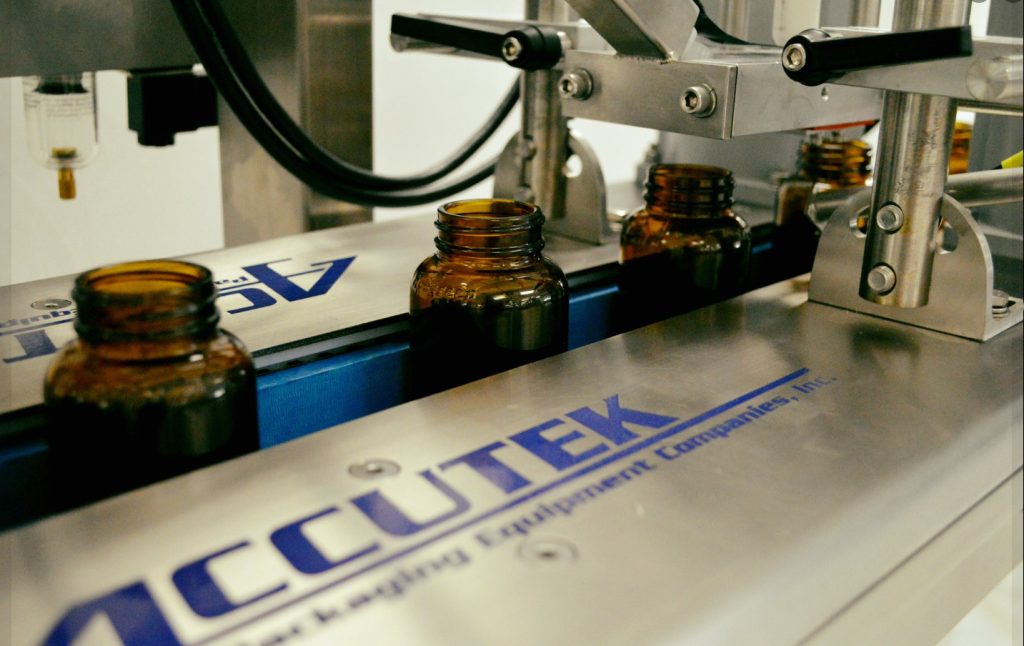
Figure 2: Accutek fully integrated automated turnkey packaging line incorporating bottle unscrambling, piston filling, and rotary chuck capping.
3. Global Procurement Trends & Future Engineering Developments (2025–2030)
As procurement managers and supply chain directors evaluate capital equipment investments for 2025 and beyond, AI-driven automation, sustainability initiatives, and Total Cost of Ownership (TCO) metrics are reshaping machine specifications.
Trend 1: Smart AI Torque Sensing and Vision-Guided Quality Inspection
Modern packaging lines no longer rely solely on physical torque limiters. Procurement mandates increasingly require smart rotary chuck cappers equipped with high-speed machine vision systems and AI anomaly detection. Integrated cameras inspect cap presence, cocked angles, tamper-evident band integrity, and seal gap distances at speeds up to 500 containers per minute. Machine learning algorithms correlate real-time servo current curves with vision data to predict mechanical wear in chuck inserts before product quality drops.
Trend 2: Eco-Friendly Lightweighting and Tethered Closure Compatibility
With global environmental mandates driving the reduction of virgin plastic weight, container walls and cap threads are becoming significantly thinner. Inline spindle cappers often distort or crush lightweight bottle necks during side-belt compression. Rotary chuck cappers resolve this by supporting the container neck collar in a rigid pocket matrix while applying controlled vertical force, making them the preferred technology for handling lightweighted PET bottles and EU-compliant tethered caps.
Trend 3: Rapid Tool-Less Changeovers & Industry 4.0 Telemetry
Contract packagers managing frequent SKU changes prioritize equipment with tool-less quick-change starwheels, magnetic chuck mounts, and automated motorized height positioning. Modern rotary chuck systems store complete operational profiles—including turret pitch speed, chuck descent rates, and target torque values—within HMI memory, reducing changeover downtime from hours to minutes.
Need Custom Rotary Chuck Capping Machinery Specifications?
Speak directly with an Accutek packaging engineer to evaluate your container samples, review torque requirements, and receive a complete proposal within 24 hours.
4. Comprehensive B2B Buyer Decision Tree: Selecting the Ideal Capping Machine
Selecting between a rotary chuck capper, a spindle capper, or an ROPP capper requires a systematic evaluation of product attributes, target output, and regulatory requirements. Use the following decision matrix during technical vendor evaluations:
| Container & Cap Parameter |
Spindle Capper (Inline) |
Rotary Chuck Capper (Multi-Head) |
ROPP Capper (Roll-On) |
| Primary Application |
Standard plastic screw caps & flat caps |
Complex, delicate, high-precision, or shaped caps |
Aluminum closures on wine, spirits & pharma bottles |
| Throughput Capability |
Up to 200 BPM |
40 to 600+ BPM |
60 to 400 BPM |
| Torque Repeatability |
Fair (± 2.0 to 3.0 in-lbs) |
Excellent (± 0.3 to 0.5 in-lbs) |
N/A (Formed threads via rollers) |
| Particulates / Dust Risk |
Moderate (Rubber friction wheels wear out) |
Very Low (Positive vertical chuck grip) |
Low (Metal swarf risk if misaligned) |
| Capital Expense (CapEx) |
Lower initial cost |
Medium to High (High ROI on low product loss) |
Medium to High |

Figure 3: Precision engineering and container testing at Accutek's California manufacturing headquarters.
5. Why Global Manufacturers Partner with Accutek Packaging Equipment Company
For over 37 years (since 1988), Accutek Packaging Equipment Company, Inc. has designed, engineered, and manufactured premium industrial packaging machinery in California, USA. With over 78,426 machines successfully built and deployed across 10+ industries, Accutek delivers unparalleled experience, technical expertise, and post-sale dependability.
American Manufacturing Excellence
Every Accutek Rotary Chuck Capper is manufactured using high-grade 304/316 stainless steel and anodized aircraft aluminum at our modern California production campus, adhering to strict ISO and cGMP guidelines.
Tri-Regional US Showroom Hubs
We operate three dedicated facilities across North America—Vista, California (HQ); Irving, Texas; and Fort Myers, Florida—offering live machine demonstrations, factory acceptance testing (FAT), and local service.
Comprehensive Parts & Lifetime Support
Our dedicated service, field support, and spare parts inventory team ensures rapid dispatch of replacement components and technical assistance to maintain maximum line uptime throughout your equipment's lifecycle.
6. Frequently Asked Questions (FAQ): Rotary Chuck Capping Machines
Here are authoritative, technical answers to common queries raised by global procurement officers, plant operations managers, and automation engineers during machine evaluation.
Q1: What is the primary operational difference between a spindle capper and a rotary chuck capper?
Spindle cappers apply closures using series of opposing motorized rubber discs that spin caps as bottles move past on a linear conveyor belt. Rotary chuck cappers transfer bottles into starwheels or pockets, stabilizing them under a vertical rotary head. The chuck drops down over the cap, applying precise downward force and rotational torque simultaneously. Rotary chuck cappers offer far superior torque precision (±0.5 in-lbs vs ±2.5 in-lbs for spindle cappers), eliminate bottle tipping, and drastically reduce cap friction scuffing.
Q2: How do servo-driven rotary chucks prevent cross-threading on plastic bottles?
Accutek servo-driven rotary chuck cappers utilize programmed reverse-rotation sensing before applying forward torque. The chuck spins the cap slightly counter-clockwise until the thread start drops into alignment with the bottle finish, detected via instantaneous torque relaxation. Once seated correctly, the servo reverses direction to engage forward tightening. Combined with rigid container neck positioning, cross-threading rates drop to near zero (<0.01%).
Q3: What torque ranges can be handled by Accutek Rotary Chuck Capping Systems?
Accutek rotary chuck cappers cover an exceptionally wide operational envelope, ranging from delicate micro-closures requiring 2 to 5 inch-pounds (such as pharmaceutical eye droppers or essential oil bottles) up to heavy-duty industrial closures requiring up to 100+ inch-pounds (such as 110mm wide-mouth tub lids or hazardous chemical containers). Torque settings are adjusted via the touchscreen HMI or precision calibrated magnetic clutches.
Q4: Can a single rotary chuck capper process multiple bottle and cap sizes?
Yes. Accutek rotary chuck machines feature quick-change modular tooling. Chuck inserts made of durable polyurethane or silicone are interchangeable to accommodate cap diameters from 10mm to 120mm. Container changeover is facilitated through tool-less change starwheels, quick-adjust guide rails, and motorized height adjustments stored in PLC digital recipes.
Q5: Are rotary chuck capping machines suitable for cleanroom or explosive environments?
Absolutely. Accutek engineers sanitary stainless-steel (316L) rotary chuck cappers suitable for ISO Class 5 / Class 7 pharmaceutical cleanrooms, featuring HEPA laminar flow hoods and CIP/SIP suitability. For flammable solvent or alcohol filling operations, we manufacture Class I, Division 1 / Division 2 explosion-proof (XP) compliant capping machines equipped with intrinsically safe pneumatic controls and purged electrical enclosures.
Q6: How does a rotary chuck capper handle pump dispensers, sprayers, and droppers?
Odd-shaped or tall-stem closures (such as lotion pumps, trigger sprayers, and glass pipettes) cannot be processed via standard drop chutes. Accutek rotary chuck cappers utilize automated Pick-and-Place mechanisms with specialized pneumatic gripping jaws. The mechanical jaw grips the closure neck, feeds the dip tube smoothly into the bottle, seats the cap, and applies calibrated torque without damaging the pump mechanism or trigger housing.
Q7: What is the typical ROI timeframe when upgrading to an automatic rotary chuck capper?
Most medium-to-large packaging operations achieve full Return on Investment (ROI) within 8 to 14 months after deploying an Accutek automatic rotary chuck capper. Savings are realized through: (1) Elimination of manual labor (2–4 operators reassigned), (2) Prevention of product leaks and expensive retailer returns caused by inconsistent capping torque, (3) Reduction in discarded caps and damaged containers, and (4) Increased line throughput speeds by 40% to 150%.
Ready to Optimize Your Capping Efficiency?
Send us your bottle and cap samples for free engineering evaluation and video testing. Our US-based engineering team is standing by to quote your custom rotary chuck solution.
