
1. Executive Overview & The Physics of Pressure Sensitive Labeling
In modern automated packaging ecosystems, the speed, repeatability, and micro-precision of brand identification define operational profitability. Pressure Sensitive Labeling Machines (also designated as self-adhesive label applicators or PSL systems) have established global dominance across the pharmaceutical, cosmetic, food and beverage, nutraceutical, and chemical manufacturing sectors. Unlike wet-glue systems requiring complex adhesive pumping, thermal cleanups, and drying queues, or shrink sleeve systems demanding energy-intensive heat tunnels, pressure sensitive labeling operates via direct mechanical transfer under controlled contact friction.
At its core, a pressure sensitive label consists of a multi-layer composite: a facestock (paper, polypropylene, PET, or vinyl), a pressure-sensitive adhesive layer (acrylic or rubber-based), a silicone release coating, and a backing web (glassine or synthetic liner). The mechanical physics of dispensing relies on pulling this liner web around a sharp steel edge—known as the peel blade or dispensing beak—at a precise angle (typically between 15° and 30°). Because the backing paper experiences an abrupt directional shear vector while the stiffer label facestock resists bending, the leading edge of the label releases cleanly from the web. At that exact microsecond, the label makes contact with the moving container, where a synchronised wipe-down roller or wrap belt applies uniform radial pressure, forming a instant permanent bond without wet adhesives or thermal dwell time.
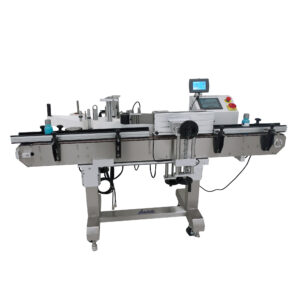
Figure 1: Accutek High-Precision Automatic Pressure Sensitive Labeler integrated with real-time thermal transfer printer for dynamic lot/date serialization.
Procurement engineers frequently evaluate labeling equipment based solely on top speed (labels per minute). However, true Operational Equipment Effectiveness (OEE) is dictated by dynamic web synchronization accuracy during speed transitions (ramp-up and ramp-down phases), web tension harmonic damping, and structural anti-vibration framing.
2. Recommended System Architectures & Product Matrix
Selecting the appropriate Pressure Sensitive Labeling Machine requires matching container geometry, line speed requirements, web width, and label orientation. Accutek Packaging Equipment manufactures a versatile fleet of USA-built labeling systems tailored for specific industrial footprints:
Inline Wrap-Around Pressure Sensitive Labelers
Engineered specifically for cylindrical round bottles, cans, and jars. Utilizes a powered wrap belt and backing pad to gently roll the label around 360° of the container perimeter with zero skew.
Dual-Head Front & Back Labeling Systems
Features twin independent servo-driven labeling heads with overhead hold-down belts and side-aligning chains. Designed for applying dual labels onto oval, rectangular, or flat-sided containers.
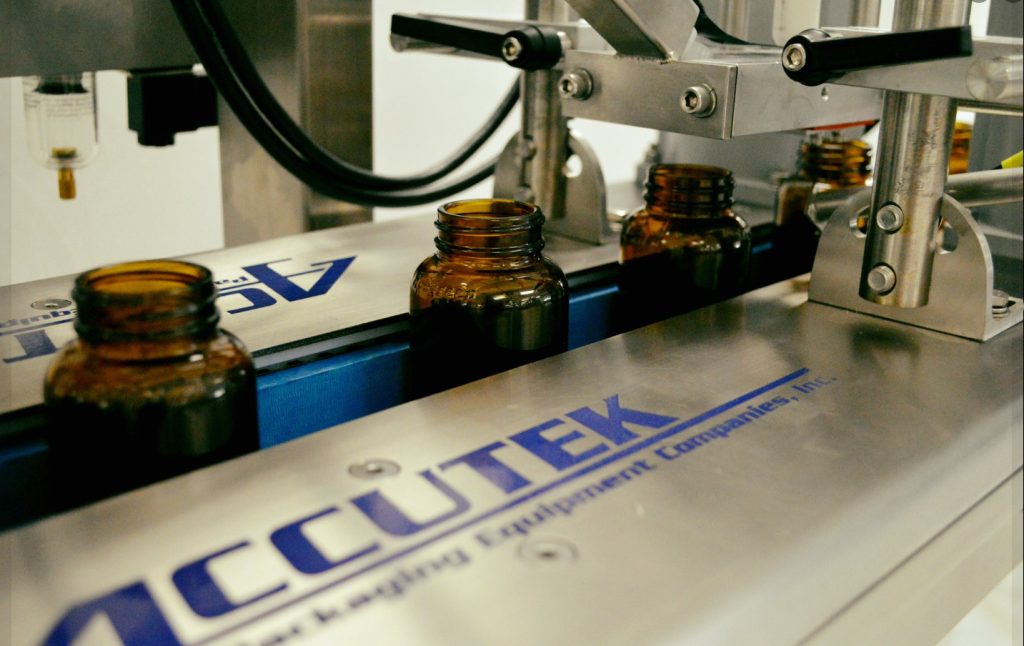
Top & Bottom Automatic Labelers
Configured with split-conveyor designs to simultaneously apply promotional, barcode, or nutritional labels on container caps, box lids, clamshells, and bottom recessed bases.
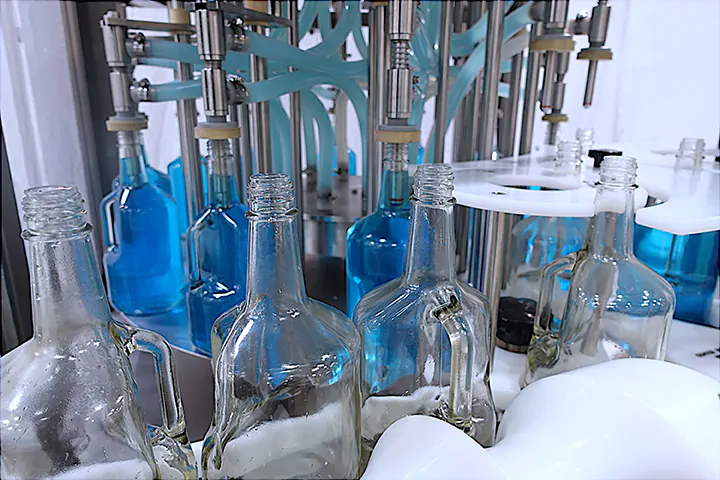
High-Speed Rotary Pressure Sensitive Systems
Continuous-motion carousel architecture where bottles are secured by mechanical cup platforms and overhead spindles, rotating the container against multiple stationary dispense heads for complex multi-label passes.
3. Information Gain: Critical Engineering Parameters Enterprise Buyers Miss
When evaluating vendor proposals for pressure sensitive labeling machinery, standard technical datasheets often mask the underlying mechanics that dictate machine reliability. Senior packaging engineers evaluate five critical subsytem metrics during technical audits:
A. Closed-Loop Servo vs. Open-Loop Stepper Motor Drive Systems
Lower-tier labeling equipment utilizes stepper motors which move in discrete angular increments. At linear web speeds exceeding 30 meters per minute, stepper drives can drop pulses during heavy acceleration or under sudden tension spikes, leading to cumulative label drift and placement errors.
Accutek’s industrial labeling heads integrate high-torque, direct-drive brushless AC servo motors governed by optical encoders operating at up to 10,000 pulses per revolution. The servo controller continuously compares actual shaft position against the master PLC command pulse, dynamically compensating for web friction, label roll inertia, and line speed variations in real time. This guarantees micro-step responsiveness, maintaining ±0.5mm placement tolerances even under intense acceleration.
B. Dynamic Web Tension & Dancer Arm Geometry
As a master roll of pressure-sensitive labels unwinds from a 12-inch outer diameter down to a 3-inch core, the torque required to pull the web changes drastically. Without active tension compensation, thin backing liners (such as 0.75 mil PET or 30# glassine) can stretch or snap, causing catastrophic line downtime. Accutek systems incorporate multi-stage dancer arms equipped with pneumatic dampening cylinders and low-friction ceramic rollers. This maintains constant web tension regardless of unwinding core diameter or rapid start-stop cycles.
| Architecture Feature | Entry-Level Stepper Labeler | Accutek Standard Servo PSL | Accutek High-Speed Rotary Servo |
|---|---|---|---|
| Dispense Drive Type | Open-Loop Stepper Motor | Closed-Loop AC Brushless Servo | Multi-Axis Synchronized Servos |
| Placement Accuracy | ± 1.5 mm | ± 0.5 mm | ± 0.25 mm |
| Max Web Linear Speed | 18 - 25 meters/min | 50 - 75 meters/min | 120+ meters/min |
| Container Handling | Basic Side Belts | Aligning Chains + Hold-Down Belt | Servo Cam-Driven Turntables |
| Clear-Film Sensor Support | Optional Upgrade (Transmissive) | Standard Ultrasonic / Capacitive | Dual Optical + Ultrasonic Array |
| Changeover Mechanism | Manual Wrenches & Scale Pads | Toolless Quick-Release & Digital Counters | Automated Recipe Servo Positioning |
C. Sensor Physics: Optical Gap Detection vs. Ultrasonic Translucent Sensing
Standard label sensors use photoelectric infrared beams to detect the opacity contrast between the label backing paper and the label gap. However, when clear-on-clear polypropylene labels are applied onto transparent PET bottles or clear cosmetics tubes, optical sensors fail entirely due to identical light transmission coefficients.
To overcome this, Accutek integrates advanced high-frequency ultrasonic and capacitive sensors. Ultrasonic gap sensors measure material thickness by monitoring high-speed acoustic attenuation waves passing through the web layer. The minute density change between the label facestock + liner versus the single liner backing gap triggers an instantaneous discrete output signal, providing flawless registration for invisible clear-film labels regardless of ink colors, metallized foils, or transparent substrates.
D. Container Stabilization & Speed-Matching Encoders
A label dispenser can exhibit perfect accuracy, but if the container skews, wobbles, or slips on the conveyor during the application window, the label will apply crooked or develop wrinkles. Accutek automatic pressure sensitive labeling machines employ three-point synchronized stabilization:
- Infeed Screw / Metering Wheel: Establishes uniform spacing between incoming containers before entering the labeling zone.
- Synchronized Overhead Top-Hold Belt: Clamps the top of lightweight or unstable bottles, securing them between the main conveyor and hold-down assembly.
- Line Encoder Synchronization: Quadrature optical encoders installed directly on the main conveyor drive shaft stream real-time speed data back to the labeler servo. If line speed fluctuates due to upstream bottle backup, the labeling head instantaneously adjusts its dispense rate, eliminating label bunching or dragging.
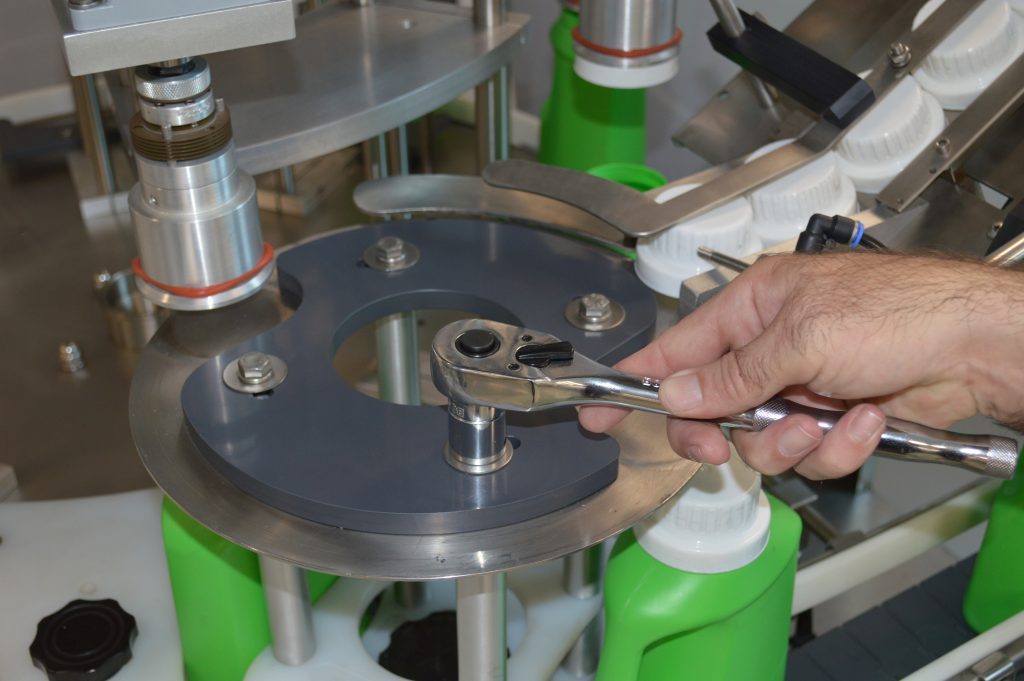
Figure 2: Accutek precision engineering team assembling heavy-duty stainless steel machine frames at our California manufacturing plant.
4. 2025–2030 Global Procurement & Technological Evolution Trends
As enterprise manufacturers modernize their packaging facilities to adapt to labor shortages, sustainability mandates, and SKU proliferation, procurement executives must look beyond immediate machine specs to anticipate future technology trends over a 10-year operational horizon:
Trend 1: Smart Vision Systems & AI-Driven Quality Inspection
Manual visual sampling on high-speed labeling lines is no longer viable for compliance-driven industries. Modern pressure sensitive labelers are rapidly migrating toward 100% inline vision verification. High-speed Smart Cameras paired with neural network AI models inspect every labeled package for key parameters: label presence, skew angle, placement height, lot number legibility (OCR/OCV), and 2D DataMatrix code readability. Failed packages are instantly routed into pneumatic reject stations equipped with sensor-verified confirmation loop mechanisms, maintaining zero-defect shipment rates.
Trend 2: Transition to Sustainable Ultra-Thin Liners & Linerless Technology
With ESG (Environmental, Social, and Governance) targets taking center stage, packaging operations are pressured to eliminate landfilled waste from discarded siliconized glassine release liners. The industry is moving toward ultra-thin PET backing films (down to 0.5 mil / 12 microns) and emerging linerless pressure sensitive label formats. Processing these thin liners requires labelers engineered with micro-friction roller bearings, active anti-static ionization bars, and delicate low-inertia brake assemblies to prevent web snaps—features standard on all Accutek modern labeling platforms.
Trend 3: Industry 4.0 Connectivity, OPC-UA & Predictive Maintenance
Modern procurement specifications demand native integration with Enterprise Resource Planning (ERP) and Manufacturing Execution Systems (MES). Accutek labelers incorporate PLC controllers supporting OPC-UA and Ethernet/IP protocols. Real-time telemetry data—including total dispense counts, servo motor temperature profiles, web break alarms, current OEE metrics, and peel-blade wear cycles—is broadcast to plant dashboards. Predictive algorithms alert maintenance technicians to replace wear components prior to catastrophic failure, maximizing Mean Time Between Failures (MTBF).
Trend 4: Toolless Rapid Changeovers & Digital Position Indicators
With the explosion of short-run craft products, private-label contract packaging, and multi-SKU retail lines, machine downtime during product changeovers severely erodes margins. Accutek’s latest pressure sensitive machines incorporate toolless quick-release locking handles, pre-calibrated digital position indicators, and stored HMI recipe profiles. Operators can switch a labeling line from a 16 oz round glass bottle to a 32 oz oval HDPE jug in under 10 minutes without single wrench tool touching the frame.
5. Economic Engineering: Total Cost of Ownership (TCO) & ROI Calculation
Capital equipment cost represents only 15% to 20% of a packaging machine’s lifetime operational cost. Procurement teams must conduct a thorough Total Cost of Ownership (TCO) calculation when selecting a Pressure Sensitive Labeling Machine.
$$\text{Annual Financial Gain} = (S_{\text{manual}} - S_{\text{auto}}) + (L_{\text{saved}} \times R_{\text{labor}}) + (M_{\text{reject}} \times C_{\text{unit}}) - \text{Maint}_{\text{annual}}$$
Where:
• $S$: Speed uplift (Bottles Per Minute transformed into total billable production output).
• $L_{\text{saved}}$: Labor hours eliminated by transitioning operators to higher-value roles.
• $M_{\text{reject}}$: Reduction in mislabeled containers, ruined product, and scrapped label rolls.
• $C_{\text{unit}}$: Total landed value of lost finished goods.
By upgrading from semi-automatic or low-spec imported label applicators to an Accutek continuous-duty servo labeling system, high-volume production facilities typically achieve complete payback within 4.8 to 8.2 months based on labor consolidation, reduced scrap rates, and zero unplanned downtime.
6. The Accutek Advantage: 37+ Years of USA Manufacturing & Engineering Trust
Founded in 1988, Accutek Packaging Equipment Company, Inc. has delivered over 78,426 custom packaging machines across North America, Europe, Asia, and Latin America. Operating out of our primary manufacturing facility in Vista, California, alongside strategic technical sales and demonstration showrooms in Texas and Florida, Accutek delivers an unmatched partnership model for enterprise manufacturers:
- Heavy-Duty USA Construction: All Accutek labeler frames are fabricated from 304 or 316L stainless steel and heavy-gauge anodized aluminum, resisting corrosive washdown environments in food, pharmaceutical, and industrial chemical facilities.
- Turnkey Packaging Integration: We don't just supply standalone labelers. Accutek specializes in complete, integrated bottling lines—seamlessly connecting our liquid filling machines, automatic spindle cappers, pressure-sensitive labelers, induction foil sealers, and rotary turntables into a synchronized production line.
- Direct OEM Parts & Lifetime Technical Support: Every machine built by Accutek is backed by our extensive domestic parts inventory and factory-trained field service technicians available for onsite setup, validation (IQ/OQ protocols), and operator training.
Optimize Your Packaging Line with Accutek Engineering
Speak directly with an experienced Accutek packaging machine specialist to review your container blueprints, label specifications, and line throughput goals.
7. Frequently Asked Questions (FAQ) for Global Enterprise Procurement
Below are detailed responses to technical questions frequently raised by global procurement leads, plant engineers, and automated line managers evaluating pressure sensitive labeling machines.
While cold glue labels have a slightly lower consumable substrate cost per unit, their operational TCO is significantly higher due to heavy cleanup requirements (glue pump flushing, pallet scrub down), long warmup cycles, messy glue application wells, and high maintenance overhead. Shrink sleeve systems require expensive steam or radiant heat tunnels, consuming massive electrical or gas utility energy. Pressure sensitive labeling offers the lowest total operational overhead: zero thermal energy requirements, instantaneous startup/shutdown, toolless roll changeovers, and a clean dry process that minimizes labor hours.
Standard optical infrared sensors fail on clear-on-clear labels because the light beam passes equally through both the clear label facestock and the clear PET liner. Accutek equips clear-label systems with high-precision ultrasonic or capacitive gap sensors. Ultrasonic sensors measure high-frequency sound wave attenuation variations through the physical thickness changes between the label+liner structure versus the single liner gap, enabling accurate registration for invisible clear labels regardless of artwork or transparency.
Label defects stem from three mechanical failures: mismatched liner dispense speed versus conveyor belt velocity, un-stabilized container wobble during application, or improper wipe-down pressure. Accutek resolves these issues by using encoder-synchronized servo motors that lock dispensing speed precisely to conveyor movement, dynamic overhead hold-down belts to clamp bottles firmly, and custom-contoured resilient foam wipe-down rollers or powered wrap-around belts that press air out smoothly from the center outward.
Yes. Ultra-thin release liners (such as 0.75 mil or 18-micron PET) and eco-friendly PCR paper substrates have lower tensile yield strength and can tear under traditional mechanical spring tensions. Accutek pressure sensitive labelers feature micro-adjustable pneumatic dancer arms, low-inertia brake rollers, and ultra-smooth peel beak geometry that gently control web acceleration, preventing web snaps when running sustainable thin-gauge label stocks.
Stepper drives operate open-loop; if mechanical friction causes a missed step, the drive controller has no awareness, leading to cumulative positional drift and misaligned labels. Brushless AC Servo motors operate in a closed feedback loop with high-resolution encoder systems. The controller continuously monitors motor shaft position thousands of times per second, correcting positional anomalies instantaneously to maintain pinpoint ±0.5mm (or ±0.25mm on rotary platforms) application accuracy.
Preventive maintenance on Accutek labeling machines is straightforward: 1) Daily: Clean residual adhesive build-up off the peel blade edge and wipe-down rollers using isopropyl alcohol. 2) Weekly: Inspect drive belts and check optical/ultrasonic sensor lenses for dust accumulation. 3) Monthly: Verify conveyor chain tension, lubricate mechanical adjustment shafts, and inspect main servo drive belts for wear. Following these basic protocols ensures decades of continuous shift operations.
Accutek labeling heads are modularly designed to accept hot-stamp coders, thermal transfer printers (TTO), or digital inkjet coders directly onto the labeling head mounting plate. The main PLC coordinates the print trigger signal with the dispense cycle, printing variable data—such as expiration dates, lot numbers, 2D DataMatrix barcodes, or GS1-128 serialization codes—onto the label facestock milliseconds before it is dispensed onto the container.
Yes! Accutek manufactures combination labeling systems (such as our dual-head inline models with wrap-around attachments). By disengaging the overhead alignment assembly and engaging the powered wrap-around module via the HMI touchscreen, operators can transition from two-panel labeling on oval shampoo bottles to full wrap-around labeling on round jars on the exact same base frame.
8. Summary & Next Steps for Engineering Procurement
Selecting the right Pressure Sensitive Labeling Machine is a critical capital decision that directly impacts brand presentation, production throughput, and line efficiency. By partnering with Accutek Packaging Equipment Company, Inc., you gain access to 37+ years of American engineering leadership, robust stainless steel construction, closed-loop servo precision, and dedicated life-cycle technical support.
Whether you require a single standalone bottle labeler or a complete turnkey automated packaging line incorporating filling, capping, labeling, and shrink sleeving equipment, our team is ready to analyze your production specs and engineered container samples.