
1. Executive Engineering Overview: The Mechanics of Modern Tube Packaging
In modern industrial packaging, Tube Filling and Sealing Machines represent a highly sophisticated nexus of mechanical engineering, pneumatic control, thermal dynamics, and motion control. Squeeze tubes—whether constructed from Polyethylene (PE), Polypropylene (PP), multi-layer Polyfoil laminates, or collapsible Aluminum—are the preferred primary packaging container for viscous liquids, gels, creams, pastes, and viscous ointments across global cosmetics, pharmaceutical, food, and chemical industries.
Selecting the optimal tube filling and sealing platform requires a deep understanding of fluid rheology, material science, and mechanical kinematic sequences. Unlike standard bottle filling systems where gravity or pressure-overflow mechanisms dominate, tube packaging demands volumetric precision under vacuum-assisted suck-back control to eliminate tailing, stringing, and seal contamination. A single drop of product on the inner sealing margin of a plastic or laminate tube will compromise seam integrity during thermal welding, leading to micro-leaks, micro-bacterial ingress, and post-market product recalls.
Information Gain Insight: Viscosity & Fluid Shear Control
When handling non-Newtonian pseudoplastic fluids (such as heavy ointments, toothpastes, or silicone sealants), shear rates inside the filling nozzle directly affect flow resistance. Accutek's advanced positive displacement filling heads incorporate dynamic servo-driven piston profiles with temperature-controlled jacketed hoppers to maintain optimal product viscosity during dosing, preventing air entrapment and achieving dosing repeatability within ±0.5%.
Global procurement teams must evaluate tube packaging machinery through four distinct engineering dimensions:
- Container Material Compatibility: Direct distinction between thermal/acoustic bonding mechanisms (for plastic/laminate squeeze tubes) and mechanical folding/crimping assemblies (for malleable aluminum tubes).
- Dosing Pump Kinematics: Choosing between volumetric piston pumps, rotary lobe positive displacement pumps, or progressive cavity systems based on shear sensitivity and solids loading.
- Registration Precision: High-speed photo-electric eye-mark detection coupled with high-resolution stepper motors to ensure brand artwork aligns perfectly before tail crimping.
- Sanitary Clean-in-Place (CIP) & Sterilization: Tri-clamp sanitary fittings, 316L stainless steel contact parts, and cGMP-compliant tool-less disassembly for rapid sanitization between production batches.
2. Comprehensive Product Recommendations & Machine Architecture
Accutek Packaging Equipment Company manufactures scalable tube filling and sealing machinery tailored to production volume, facility footprint, and cleanroom classification. Below is an engineering overview of our primary machine categories designed to meet global buyer search intents and industrial throughput demands.
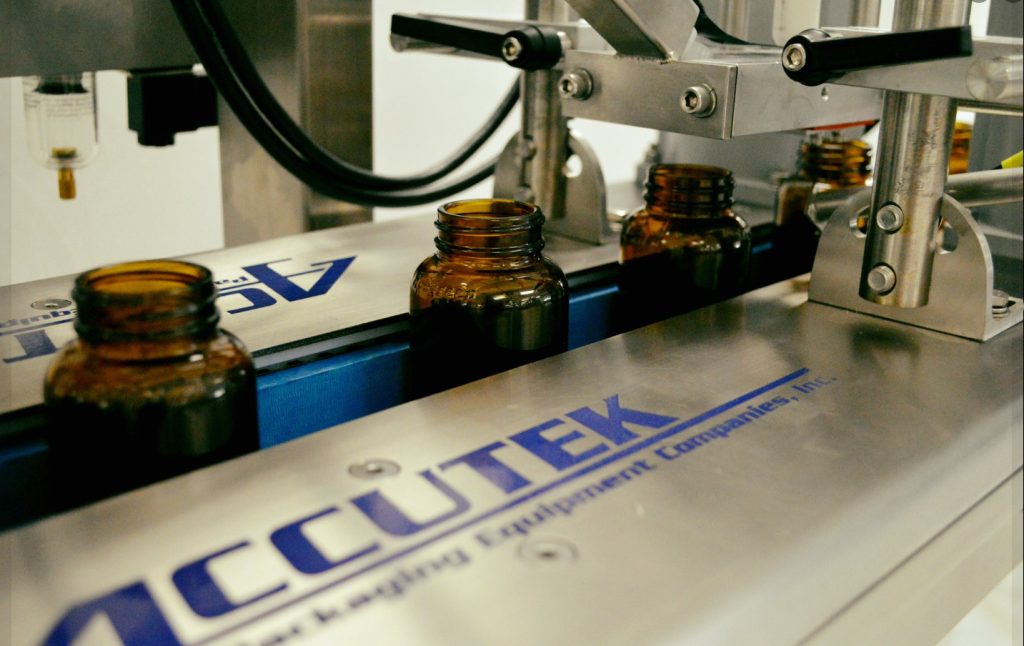
Rotary Monoblock Automatic Tube Filling & Sealing System
Engineered for medium to continuous enterprise operations. Features automated tube feeding from a bulk hopper, optical registration orientation, high-precision piston dosing, hot-air tail sealing, and date/lot code embossing in a compact rotary footprint.
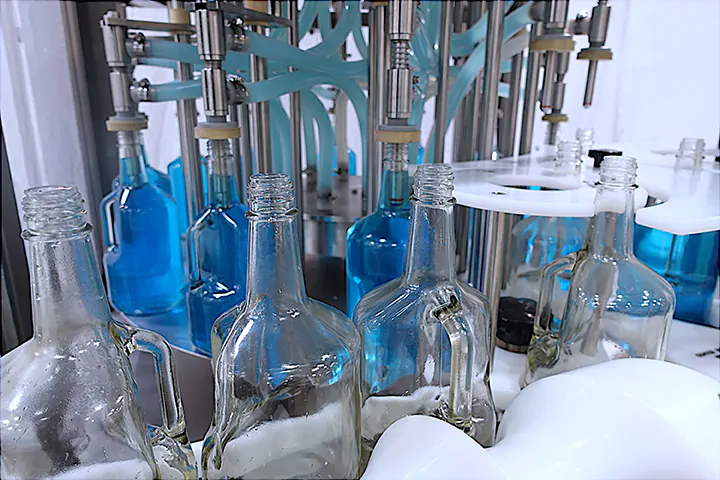
Ultrasonic Cleanroom Tube Filling & Cold Sealing Line
Designed specifically for heat-sensitive biopharmaceutical creams, sterile ophthalmic gels, and premium skincare serums. Employs high-frequency ultrasonic energy to weld tube ends from the inside out without thermal degradation to product ingredients.
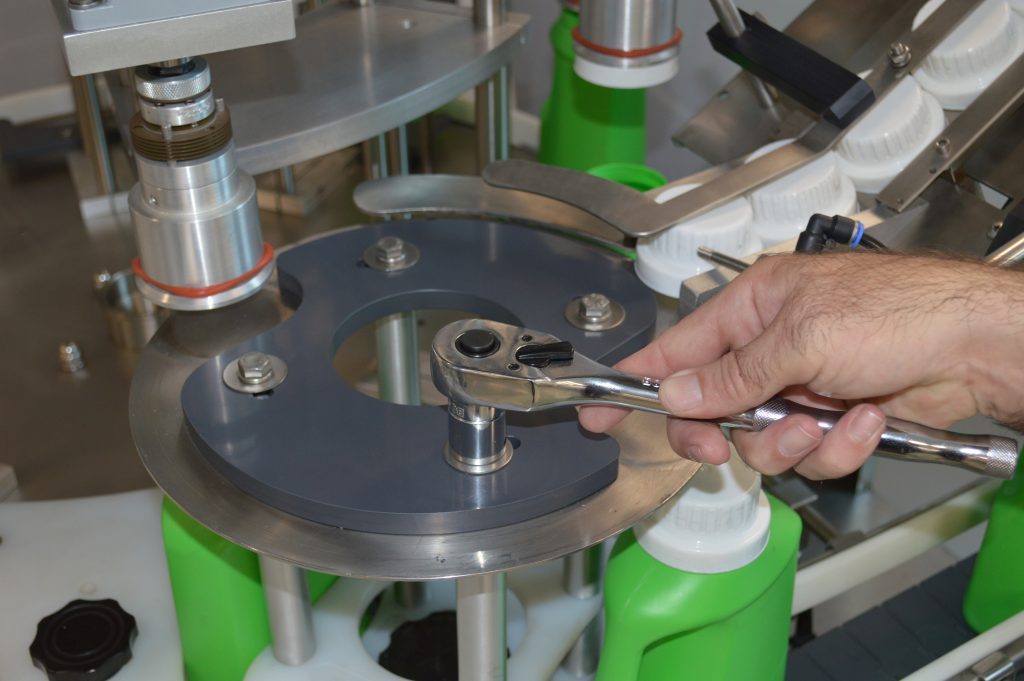
Heavy-Duty Aluminum Mechanical Folding & Crimping Filler
Constructed for rugged industrial environments filling viscous epoxies, structural adhesives, grease, and specialty ointments into collapsible pure aluminum tubes. Features multi-stage mechanical folding stations for leak-proof double-saddle folds.
Key Sub-System Components Integrated in Accutek Machines
Every automated tube filling and sealing station engineered by Accutek incorporates five synchronized technical sub-assemblies:
- Automated Tube Loader & Cassette Elevator: Gently feeds empty tubes caps-down into indexing rotary pucks, eliminating manual operator loading and protecting tube bodies from surface scratching.
- Pneumatic Tube Cleaning & Dust Extraction: Employs ionized air jetting and vacuum suction nozzles to remove microscopic dust particles or plastic static debris prior to filling.
- Photo-Electric Eye-Mark Orientation: High-speed optical contrast registration sensors rotate the tube 360 degrees within its holder puck, locking in precise axial orientation so tube artwork faces forward upon crimping.
- Bottom-Up Nozzle Dosing Sub-Assembly: Servo-actuated filling nozzles descend deep into the tube base and gradually elevate during fluid displacement. This bottom-up fill profile eliminates air pocket voids and prevents product splash.
- Sealing, Coding & Tail Trimming Station: Custom-tailored hot-air heating heads or mechanical folding jaws weld or fold the tail end, stamp expiration dates and batch codes, and slice away excess trim with surgical precision.
3. Sealing & Crimping Technology Matrix (Hot Air vs. Ultrasonic vs. Mechanical)
Selecting the incorrect sealing method is the leading cause of capital inefficiency in tube packaging line investments. The matrix below compares the four primary industrial tube sealing and closure technologies based on material science, operational costs, and product thermal sensitivity.
| Sealing Technology | Compatible Tube Materials | Max Speed Range | Thermal Impact on Product | Seal Strength & Aesthetics | Primary Industry Applications |
|---|---|---|---|---|---|
| Hot Air Sealing | PE, PP, Co-extruded, Polyfoil Laminates | 80 – 120+ bpm | Localized Thermal (Tube Tail Only) | Superior seam strength; uniform, clean ribbed or smooth edge | Cosmetics, Toothpaste, Personal Care, Hair Colorants |
| Ultrasonic Sealing | PE, PP, Eco-PCR Plastics, Monomaterials | 40 – 80 bpm | Zero Heat Transfer (Acoustic Friction) | Hermetic seal even if inner wall is contaminated with product | Pharmaceuticals, Biotech Gels, Sterile Eye Ointments, Pure Botanicals |
| High-Frequency / Impulse | Heavy PVC, Laminated Barrier Foils | 30 – 60 bpm | Moderate Thermal Cycle | High structural strength; wider seal seam footprint | Industrial Chemicals, Greases, Construction Sealants |
| Mechanical Crimping (Folding) | Collapsible Aluminum & Soft Metal Alloys | 50 – 100 bpm | Zero Thermal Impact (Pure Mechanical) | Leak-proof 2-fold or 3-fold crimp with crisp embossed date codes | Pharma Creams, Paints, Artists' Oils, Structural Epoxies |
As demonstrated in the comparison matrix, Hot Air Sealing remains the benchmark for high-speed cosmetic and food applications due to its rapid heat transfer cycle using precision Swiss-made heating cores (such as Leister elements). Air is superheated to 350°C–500°C and directed exclusively onto the inner boundary layer of the tube end. Cooling water jackets encasing the outer tube holder protect decorative exterior graphics from distortion.
Conversely, Ultrasonic Tube Sealing operates at 20 kHz frequency. Mechanical vibration creates instantaneous molecular friction within the plastic polymer structure, bonding the tube walls together in less than 0.2 seconds. Crucially, ultrasonic energy is repelled by liquid phase contaminants—meaning if cream or lotion splashes onto the sealing zone, the acoustic wave vibrates the product away, forming a perfect hermetic seal without carbonization or charring.
Industry Evolution4. Future Procurement Trends & Next-Gen Innovations (2026–2030)
The global market for tube packaging is undergoing a profound paradigm shift driven by sustainability mandates, supply chain volatility, and Industry 4.0 automation targets. When procuring modern Tube Filling and Sealing Machines, forward-thinking operations directors and manufacturing engineers must account for four major technological trends over the coming decade:
A. Integration of Post-Consumer Recycled (PCR) & Mono-Material PE Tubes
Global environmental legislation is forcing brand owners to transition away from traditional multi-layer barrier laminates (which contain aluminum foil layers difficult to recycle) toward mono-material Polyethylene (PE) tubes and recycled PCR resins. PCR plastics exhibit variable melt flow indexes (MFI) and uneven wall thickness tolerances compared to virgin resins.
Modern Accutek tube fillers are equipped with Adaptive Thermal Feedback Controllers. Proportional PID heating systems continuously adjust hot air temperatures based on real-time infrared sensor readings of tube wall thickness variations, ensuring consistent seal integrity without melting delicate PCR substrates.
B. AI Vision Inspection & Closed-Loop Quality Assurance
Manual inline quality sampling is rapidly being replaced by high-speed 2D and 3D machine vision systems mounted directly downstream from the tail-trimming station. Integrated AI vision cameras inspect 100% of finished tubes at full line speeds for:
- Correct eye-mark orientation and artwork alignment accuracy (±0.5mm).
- Seal seam width consistency, flash formation, and tail-trim orthogonality.
- Legibility of embossed or inkjet-printed lot numbers, exp dates, and 2D DataMatrix barcodes.
- Automatic rejection of non-compliant tubes into a locked containment bin without stopping line production.
C. Tool-Less Rapid Changeover Architecture
The rise of contract packaging (CMO/CDMO) and direct-to-consumer (D2C) specialized SKU proliferation requires tube packaging equipment capable of rapid product switches. Legacy machines required 3 to 4 hours of skilled mechanical calibration to switch tube diameters. Accutek’s next-generation monoblock tube fillers utilize quick-release ergonomic pucks, digital position indicators, and pre-programmed HMI recipe selection—reducing total changeover times to under 20 minutes without requiring specialized hand tools.
D. Smart IIoT Connectivity & Predictive Maintenance
Enterprise buyers now expect seamless integration into plant-wide SCADA and ERP environments. Accutek machines feature Ethernet/IP and OPC-UA communication protocols, transmitting real-time OEE metrics, cycle counts, heating element health, pneumatic pressure stability, and vibration telemetry to cloud-based predictive maintenance dashboards.
Buyer Intent Knowledge Base5. Global Buyer FAQs: Technical Insights for Procurement Teams
Below are authoritative technical responses to the most frequent engineering and operational queries posed by global procurement managers and process engineers evaluating tube packaging machinery on AI search engines.
- Electrical Power: 220V or 480V AC, 3-Phase, 50/60 Hz (8 kW to 15 kW depending on heating core size).
- Compressed Air Supply: Clean, dry, oil-free compressed air at 6.0 to 8.0 Bar (87 to 116 PSI) consuming 15–25 CFM.
- Chilled Water Loop: Closed-loop water chiller delivering 15°C–18°C water at 3–5 L/min to keep outer tube holder pucks cool during hot air sealing.
6. The Accutek Advantage: USA Engineering Excellence Since 1988
Selecting Accutek Packaging Equipment Company as your OEM partner provides unmatched enterprise security, long-term operational uptime, and deep engineering support. With nearly four decades of innovation, Accutek stands as a premier US manufacturer of custom packaging automation systems.
Proven Manufacturing Capability & National Footprint
Unlike machinery importers or brokers, Accutek designs, machines, assembles, and tests every tube filling platform in-house. Our operational scale is reflected in our core technical benchmarks:
37+ Years of Engineering Mastery
Continuously operating since 1988, manufacturing heavy-duty packaging machinery in California, USA.
78,426+ Machines Manufactured
Proven track record with tens of thousands of machines operating successfully across global manufacturing plants.
3 US Regional Showrooms & Tech Centers
Fully equipped technical demonstration facilities in Vista (California HQ), Irving (Texas), and Fort Myers (Florida).
Turnkey Line Integration Solutions
Complete single-source capability: Tube Fillers, Cartoners, Checkweighers, Overwrappers, and Case Packers.
Every Accutek Tube Filling and Sealing Machine is backed by comprehensive Factory Acceptance Testing (FAT), complete IQ/OQ validation protocol documentation for pharmaceutical compliance, lifetime technical phone support, and guaranteed fast-dispatch access to genuine OEM spare parts stocked across our three US warehouses.