
Packaging Equipment Insights & News
Discover technical resources, machine guides, maintenance tips, and automation trends from industry specialists.
What Is an Auger Powder Filling Machine?
What is an auger powder filling machine? It is a dosing system designed to measure and dispense powdered products into containers. Auger Powder Filling Machines use a rotating screw, called an auger, to move a controlled volume of powder from a hopper. The screw turns inside a carefully designed tube. Each rotation delivers a measured amount.
Simple in principle.
In a typical production line, the machine fills bottles, jars, pouches, or other suitable containers. An operator sets the target weight, auger speed, and filling cycles through the control panel. Sensors can help detect containers and reduce missed fills. The process looks clean and steady when the powder flows consistently. Powder varies. Moisture, particle size, density, and static electricity can change the final weight. Operators may need to adjust the settings during a production run. This practical detail is often overlooked in basic explanations.
A dependable machine requires more than a precise screw. The hopper design, sealing system, weighing method, and cleaning access also matter. Food, cosmetic, supplement, and regulated manufacturing environments may require documented procedures and equipment validation. Requirements differ by product and location, so buyers should confirm them with qualified technical and quality professionals. No setting works everywhere.
From an engineering perspective, auger filling offers useful repeatability, compact construction, and flexible dosing control. However, it is not automatically perfect. Powder behavior must be tested with the actual product. A thoughtful evaluation should compare accuracy, speed, dust control, maintenance, and operator experience. That approach helps businesses choose equipment based on real production needs rather than attractive specifications alone.
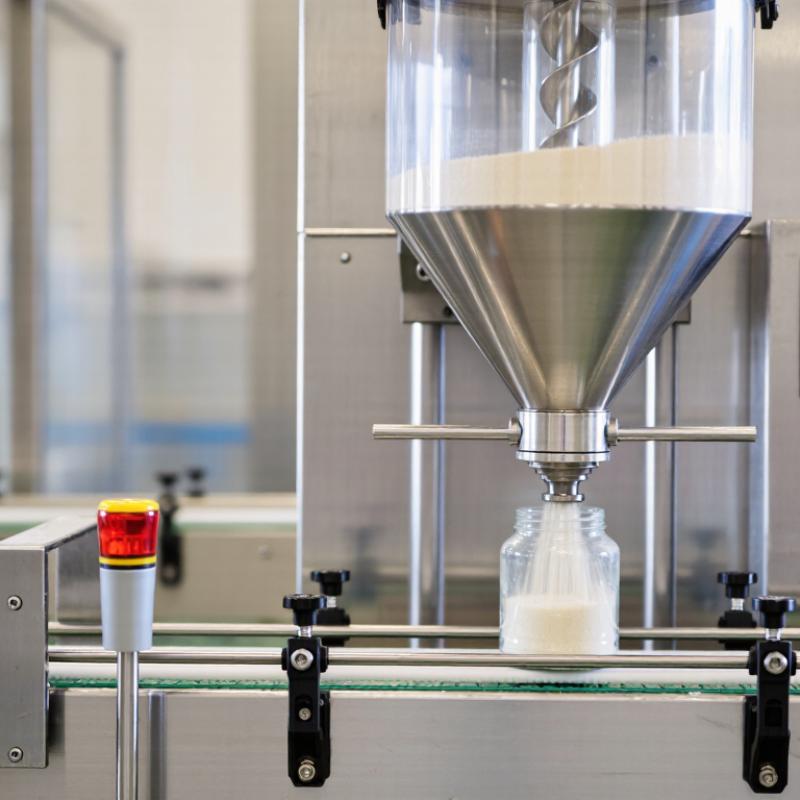
Definition and Purpose of an Auger Powder Filling Machine
An auger powder filling machine measures and dispenses dry products using a rotating screw inside a forming tube. As the screw turns, it moves powder toward a container or pouch. The machine controls the dose by adjusting screw speed, rotation count, or both. It is commonly used for flour, spices, drink mixes, and powdered supplements. The exact setup depends on the powder’s flow and bulk density.
The purpose is repeatable filling with less manual scooping and spillage. An operator may set a target weight, then check sample containers on a scale. Small changes in moisture or particle size can affect flow, so settings need validation with the actual product. Powder can bridge above the screw. That matters. Grand View Research’s Food Packaging Equipment Market report estimates the global market reached USD 20.35 billion in 2023, with a projected 5.6% compound annual growth rate from 2024 to 2030. This broader market figure is not specific to auger fillers, but it shows the scale of investment in automated packaging. In practice, a machine’s stated accuracy is only a starting point; real results depend on product behavior, setup, and routine checks.
Key Components and Their Functions
What Is an Auger Powder Filling Machine?
Key Components and Their Functions
An auger powder filling machine doses dry, free-flowing, or slightly cohesive powders into containers. Its central tool is a rotating screw, called an auger. Each revolution moves a controlled powder volume toward the discharge nozzle. Fill accuracy depends on screw design, powder density, speed, and product flow.
The hopper stores the powder and keeps it available for dosing. An agitator prevents bridging, especially when powder forms a crust above the auger. The auger screw controls the dose. A servo motor provides precise rotation and repeatable speed. The filling nozzle reduces dust and helps place powder neatly inside narrow containers. Load cells may check container weight after filling. Sensors confirm container position, hopper level, and missing containers.
Small details matter. A poorly polished auger can retain powder between batches. An oversized hopper may increase pressure and change the dose. Operators should record test fills because powder behavior can shift during a production run. That is often overlooked.
According to PMMI’s 2024 State of the Industry report, U.S. packaging machinery shipments were valued at more than 11 billion dollars in 2023. This investment reflects demand for automation, traceability, and consistent dosing. Grand View Research also projects continued growth in the global powder filling machine market through 2030. However, published accuracy claims need practical verification. A machine may perform differently with humidity, particle size, or bulk-density changes. Trial runs remain essential before full production.
How the Auger Filling Process Works
What Is an Auger Powder Filling Machine?
How the Auger Filling Process Works
An auger powder filling machine measures dry products with a rotating screw inside a fitted tube. The screw moves powder forward in controlled volumes. A motor then turns the auger for a programmed number of rotations. More rotations usually deliver more material. However, powder behavior can change quickly.
The process begins when powder enters the hopper. An agitator may prevent bridging above the auger. The machine then indexes an empty container beneath the filling nozzle. The auger rotates and releases the target dose. Sensors check container presence and reduce accidental spills. Operators often verify fill weights during production, not only during setup.
Particle size, moisture, density, and electrostatic charge all influence accuracy. Fine powder may cling to metal surfaces. Heavy powder may settle faster. A clean-looking fill is not always a stable fill. That assumption needs testing.
Practical checks still matter. Operators should compare the first, middle, and final containers, then adjust speed or auger settings when variation appears. Loose powder requires patience.
Compatible Powders and Common Applications
What Is an Auger Powder Filling Machine?
Compatible Powders and Common Applications
An auger powder filling machine measures products with a rotating screw inside a fitted hopper. The screw moves a controlled volume toward each container. This design suits many dry, powdered materials, especially those with consistent particle size and moderate flow behavior.
Common examples include flour, starch, milk powder, protein blends, spices, salt, coffee, baking mixes, and powdered drink ingredients. It can also handle selected cosmetic powders, nutritional supplements, and non-hazardous industrial materials. Fine powders may bridge inside the hopper, while moist powders can form lumps. These issues reduce accuracy and may require vibration, agitation, or a different screw design.
Application needs determine the machine setup. Food processors often use auger fillers for jars, pouches, sachets, and small bags. Pharmaceutical facilities may use them for approved, carefully controlled formulations. Cosmetic producers can fill face powder, clay blends, and dry masks. Industrial operations may package dry additives or mineral powders.
In practice, no auger handles every powder equally. Product testing matters. Operators should check bulk density, moisture, particle size, compressibility, and flow rate before production. Cleaning access is also important, particularly where powder collects around seals or hopper corners. A filler may achieve excellent repeatability during trials, yet behave differently after humidity changes. That detail is easy to overlook. Calibration checks and documented inspections help maintain reliable weights and protect product quality.
What Is an Auger Powder Filling Machine? - Compatible Powders and Common Applications
| Powder Category | Typical Flow Behavior | Auger Filling Suitability | Common Applications | Important Considerations |
|---|---|---|---|---|
| Free-flowing powders Examples: granulated sugar, salt, crystalline ingredients |
Particles move easily and generally discharge consistently. | Good, especially when the auger and hopper are correctly sized. | Food ingredients, seasoning blends, household products, and chemical powders. | Control vibration and hopper refill conditions to reduce segregation or weight variation. |
| Non-free-flowing powders Examples: flour, powdered sugar, starch, and some protein powders |
Cohesive; may bridge, compact, or form lumps. | Good with agitation, a suitable auger design, and controlled feeding. | Baking ingredients, nutrition products, dry mixes, and powdered beverages. | An agitator or hopper design that prevents bridging may be required; dust extraction can improve handling. |
| Fine powders Examples: powdered milk, cocoa, pigments, and fine mineral powders |
Small particles can be cohesive and easily become airborne. | Good when the machine is configured for controlled, low-dust dosing. | Dairy ingredients, beverages, cosmetics, coatings, and specialty chemicals. | Use dust control, sealed transfer points, and appropriate cleaning procedures. |
| Granular or particle-based materials Examples: instant coffee granules, dried herbs, and small pellets |
Usually flows better than cohesive powders, but particle size may vary. | Suitable for volumetric dosing when particle uniformity is acceptable. | Food, agricultural products, detergents, and granular chemicals. | Check whether the auger may damage fragile particles or cause segregation. |
| Moisture-sensitive powders Examples: hygroscopic salts, powdered drink mixes, and some pharmaceutical ingredients |
May absorb moisture, cake, or change flow characteristics during processing. | Suitable if environmental and material-contact conditions are controlled. | Food, pharmaceutical, nutraceutical, and chemical processing. | Manage humidity, minimize residence time, and use compatible contact materials. |
| Dusty or combustible powders Examples: flour, starch, sugar dust, and some organic powders |
Can create airborne dust and may present a combustible-dust hazard. | Potentially suitable with a documented safety assessment and proper controls. | Food processing, plastics, woodworking materials, and chemical production. | Evaluate dust collection, grounding, ignition control, and applicable workplace safety requirements. |
Factors for Choosing and Operating the Machine
What Is an Auger Powder Filling Machine?
Factors for Choosing and Operating the Machine
An auger powder filling machine uses a rotating screw to move and measure dry powder. The screw turns inside a fitted tube, then releases a controlled amount into each container. It suits products such as flour, spices, minerals, and other free-flowing or fine powders.
Choosing the machine starts with the powder, not the container. Fine powder may create dust, while damp powder can form bridges inside the hopper. Check particle size, moisture, density, and flow behavior before selecting the auger diameter. A smaller auger can improve accuracy for light doses. A larger auger may support faster filling. However, speed often reduces consistency. That trade-off is easy to underestimate.
Cleanability matters.
Select contact parts that operators can remove without special tools. Smooth surfaces reduce leftover powder and simplify inspection. Test several sample weights before production begins. Record the average weight, variation, screw speed, and filling time. During operation, keep the hopper level reasonably stable. An almost empty hopper can change pressure and dosing results. Operators should also watch for vibration, unusual noise, and powder buildup around the outlet. These details often reveal problems early. In practice, even a well-set machine may need adjustment when room humidity changes. Perfect settings rarely stay perfect. Calibration should be repeated after cleaning, material changes, or extended downtime.
FAQS
A rotating screw moves powder through a fitted tube into a container. Dose control usually relies on screw speed, rotation count, or both.
It can handle products such as flour, spices, starch, salt, coffee, drink mixes, and selected cosmetic or industrial powders. Product testing still matters.
Moisture, particle size, bulk density, and flow behavior can affect dosing. Fine powder may bridge, while damp powder may form lumps.
Match the auger to the powder and target dose. Smaller augers may suit light doses; larger ones can support faster filling, sometimes with less consistency.
Weigh sample containers on a scale and record the average, variation, screw speed, and filling time. Repeat checks during production.
An almost empty hopper can change pressure around the screw and alter dosing. Keep the powder level reasonably stable.
Removable contact parts and smooth surfaces help operators clear leftover powder. Check hopper corners, seals, and the outlet.
Recheck after cleaning, material changes, extended downtime, or changes in room humidity. Settings can drift.
Watch for vibration, unusual noise, or powder buildup near the outlet. These details may signal a problem, though they do not explain every cause.
Conclusion
Auger Powder Filling Machines are designed to measure and dispense powdered products accurately into containers, pouches, or other packaging formats. They use a rotating auger screw to move a controlled volume of powder from a hopper to the filling outlet. Key components typically include the hopper, auger screw, drive motor, filling nozzle, control system, and weighing or feedback sensors. Together, these parts help maintain consistent dosing, reduce product waste, and support efficient packaging operations.
During operation, powder flows into the hopper while the auger rotates for a programmed number of turns or a specified filling time. The machine then releases the measured powder into each container, with adjustments made according to product characteristics and target weight. These machines can handle many dry powders, including food ingredients, nutritional powders, chemicals intended for lawful industrial use, and cosmetic materials. When choosing and operating one, users should consider powder flowability, density, moisture, particle size, required accuracy, production speed, container type, cleaning needs, and the machine’s control and safety features.

Blog Tags: