
Packaging Equipment Insights & News
Discover technical resources, machine guides, maintenance tips, and automation trends from industry specialists.
China Best Tablet Counter Filling Machines for Global Buyers
Table of Contents
- What Tablet Counter Filling Machines Are and How They Work
- Key Machine Types for Different Tablet Products and Production Needs
- How to Assess Counting Accuracy, Speed, and Filling Performance
- Safety Standards, Customization Options, and Supplier Reliability
- How Global Buyers Can Compare Quotes and Manage Overseas Delivery
- FAQS
- Conclusion
- Related Posts
Global pharmaceutical production is expanding, and reliable solid-dose packaging is becoming increasingly important. The IQVIA Institute’s Global Use of Medicines 2024 Outlook projects global medicine spending could reach approximately US$2.3 trillion by 2028. This growth creates steady demand for accurate, flexible, and traceable counting equipment. Tablet Counter Filling Machines help manufacturers count tablets, fill containers, and reduce manual handling during packaging operations.
Speed matters. Accuracy matters more.
Grand View Research reports that pharmaceutical packaging growth is supported by automation, serialization, and stronger quality-control requirements. These trends make Chinese equipment suppliers attractive to global buyers seeking competitive pricing and configurable production lines. Modern Chinese machines may offer servo-driven counting, dust-control systems, automatic bottle feeding, desiccant insertion, capping, and label inspection. Some models can also connect with vision systems and electronic batch records.
Details decide.
However, purchasing decisions should not rely on catalog photographs or a low initial quotation. Buyers should review counting accuracy, changeover time, contact-part materials, cleaning access, noise levels, and documented factory testing. GMP expectations, local electrical standards, and validation requirements must also be confirmed before shipment. The PMMI pharmaceutical machinery market coverage consistently emphasizes integration, data visibility, and operator safety, but implementation quality varies between suppliers.
No supplier is perfect.
A responsible comparison should include sample testing with the buyer’s tablets, container sizes, production speed, and packaging format. Factory audits, FAT and SAT records, spare-parts support, and after-sales response times provide stronger evidence than marketing claims. This guide examines China’s leading options for global buyers while recognizing an important limitation: specifications can look similar, yet long-term reliability depends on engineering discipline, service capability, and transparent communication.
What Tablet Counter Filling Machines Are and How They Work
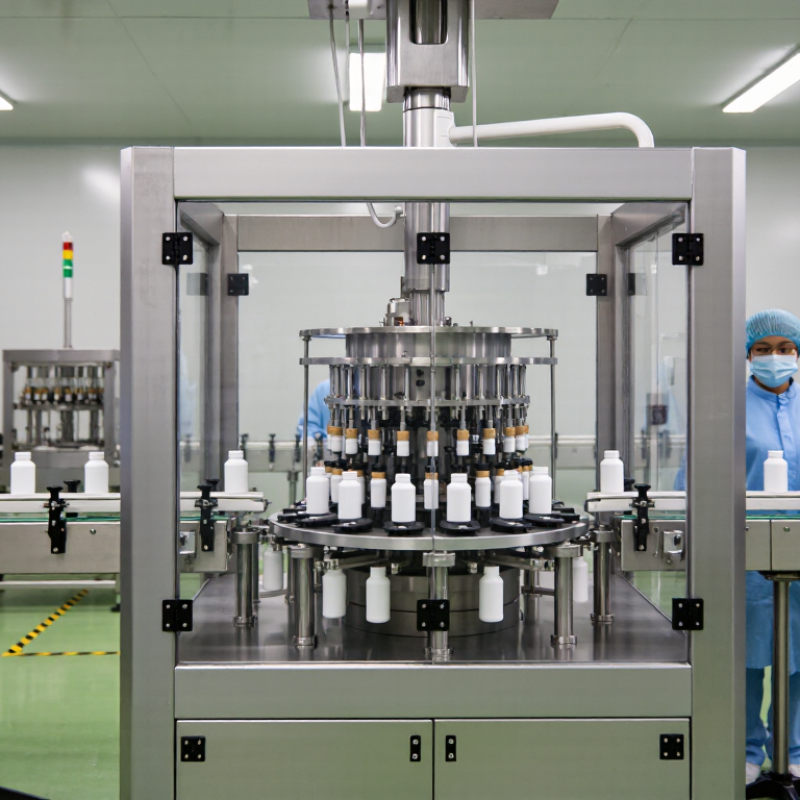
Tablet counter filling machines are designed to count solid tablets and place a measured quantity into containers. Their core system usually includes a hopper, vibrating channels, sensors, and a filling nozzle. Tablets move from the hopper into separate lanes. Controlled vibration helps them travel steadily without excessive impact.
Optical or electronic sensors detect each tablet as it passes the counting point. When the programmed quantity is reached, a gate closes and the filled container moves forward. This process improves speed, consistency, and operator safety in regulated production. Container size, tablet shape, coating, and surface friction all affect performance. Small, sticky, or irregular tablets may require slower vibration and careful setup. No machine is flawless. Poor calibration can still cause overfilling or shortages.
Tips: Check tablet dimensions before selecting equipment. Run a practical sample test with your real containers. Keep the counting area clean and inspect sensors regularly. Operators should record adjustments, rejected containers, and unusual tablet movement. That evidence supports reliable quality checks. It also reveals weaknesses that specifications may hide. A useful machine is not simply fast; it must deliver repeatable counts with minimal product damage. Clearance, power requirements, cleaning access, and local compliance should be reviewed before purchase.
Key Machine Types for Different Tablet Products and Production Needs
China Best Tablet Counter Filling Machines for Global Buyers
Tablet products need different counting methods. Coated tablets often require gentle, low-drop handling to prevent edge damage. Standard electronic counters suit regular tablets and capsules in medium-volume production. Multi-channel systems provide higher output for large orders, but they require accurate feeding and stable tablet flow.
According to the 2024 Global Pharmaceutical Manufacturing Equipment Market report by Grand View Research, the sector is projected to grow steadily through 2030. That growth reflects stronger demand for automated, traceable packaging equipment. The 2024 ISPE Pharmaceutical Engineering Trends report also emphasizes contamination control, line clearance, and reliable data records. These points matter when comparing counting machines, not just their advertised speed.
Small laboratories may prefer compact counters with quick changeovers and simple cleaning access. High-volume facilities usually need multi-lane counting, automatic bottle separation, and integrated rejection systems. Fragile or effervescent tablets may need vibration control and shorter transfer paths. Hygroscopic products require careful exposure management.
Speed is not everything.
In practice, quoted capacity can fall when tablets vary in size, shape, or coating quality. This is where buyer testing becomes essential. A factory trial using real tablets can reveal counting errors, dust buildup, and inconvenient adjustments. The 2023 PMMI Packaging Compass report identifies automation and flexible production as continuing packaging priorities. Still, flexibility sometimes adds maintenance points. Buyers should examine validation records, cleaning time, sensor accuracy, and spare-part access before approving a machine.
How to Assess Counting Accuracy, Speed, and Filling Performance
China Best Tablet Counter Filling Machines for Global Buyers
How to Assess Counting Accuracy, Speed, and Filling Performance
When evaluating a tablet counter filling machine, begin with counting accuracy. Test several tablet shapes, sizes, and surface finishes, not only uniform samples. Place a calibrated sample beside the discharge point and compare the machine count with the manual count. A practical trial should cover repeated batches, because one successful run proves very little. Check whether broken tablets, dust, or static affect the sensor. Even a small counting error can create costly rework.
Speed must be measured under realistic conditions. Record bottles per minute while the hopper remains adequately filled. Ask for data at both low and high speeds. Faster operation may reduce accuracy or cause tablets to bounce from the bottle neck. Filling performance also depends on bottle stability, tablet flow, and the accuracy of the level sensor. Inspect filled containers by weight and visual count. The machine may perform differently after several hours of operation. That detail is easy to miss.
Tips: Request a sample test using your actual tablets and containers. Measure results over at least three runs. Keep records of speed, rejected bottles, count errors, dust, and stoppages. Ask how operators adjust sensors and clean contact areas. Simple controls help. Do not rely only on brochure figures. A realistic factory trial offers stronger evidence, although my own test plans would still include more container sizes next time.
China Best Tablet Counter Filling Machines for Global Buyers - How to Assess Counting Accuracy, Speed, and Filling Performance
| Machine Configuration | Typical Tablet Diameter Range | Typical Counting Speed | Counting Accuracy Target | Recommended Bottle Output | Filling Performance | Suitable Application | Key Verification Points |
|---|---|---|---|---|---|---|---|
| 8-channel electronic counter with single-lane filling | 3–12 mm | Up to 30 bottles/min, depending on count per bottle and tablet characteristics | ≥99.5% under controlled test conditions | 30–60 bottles/min for low-count products | Suitable for 30–120 mL bottles; adjustable chute and bottle positioning | Small pharmaceutical, nutraceutical, and laboratory batches | Run at least 10,000 tablets and record shortages, overcounts, broken tablets, and stoppages |
| 16-channel electronic counter with dual-lane filling | 3–15 mm | Up to 60 bottles/min for stable, free-flowing tablets | ≥99.7% under controlled test conditions | 60–120 bottles/min for low-count formats | Supports 60–250 mL containers with automatic bottle indexing | Medium-volume production and contract packaging | Check performance with different tablet shapes, coatings, dust levels, and bottle counts |
| 24-channel counter with dual-lane filling and reject detection | 2–18 mm | Up to 90 bottles/min, product dependent | ≥99.8% under controlled test conditions | 90–180 bottles/min for typical 30–100 count fills | Suitable for 60–500 mL bottles; includes no-bottle/no-fill interlock | General pharmaceutical and health-product packaging | Verify reject accuracy, sensor response, fill-level consistency, and recovery after line stops |
| 32-channel counter with multi-lane filling | 2–18 mm | Up to 120 bottles/min, depending on count quantity and container format | ≥99.8% under controlled test conditions | 120–240 bottles/min for low-count products | Supports 60–750 mL containers with automatic indexing and accumulation control | High-volume nutraceutical and pharmaceutical lines | Confirm rated speed using the buyer’s actual tablets, target count, bottle size, and closure process |
| 48-channel counter with multi-lane filling and vision inspection | 2–20 mm | Up to 180 bottles/min in optimized production conditions | ≥99.9% target with validated product settings | 180–360 bottles/min for suitable low-count formats | Suitable for 60–1,000 mL containers; supports reject confirmation and line synchronization | Large-scale continuous production with strict in-process controls | Require a documented factory acceptance test, challenge samples, data records, and line-clearance procedures |
Safety Standards, Customization Options, and Supplier Reliability
China Best Tablet Counter Filling Machines for Global Buyers
Safety begins with containment, not speed. Guards, interlocked doors, emergency stops, and dust extraction should be visible and testable. The machine should support GMP documentation, calibration records, and electronic data controls where required. FDA guidance on process validation stresses documented, repeatable performance throughout production. A counter reaching 60 bottles per minute means little if rejects are not traceable. Tablet shape, friability, bottle size, and counting speed all affect accuracy. Real factory trials matter.
Customization should include stainless-steel contact parts, adjustable channels, vision inspection, reject collection, and quick-change guides. According to Grand View Research’s pharmaceutical packaging market report, the global market was valued at over USD 100 billion in 2023, increasing pressure for flexible automation. Yet customization can create hidden maintenance issues. More sensors do not always mean better control. Supplier reliability depends on factory acceptance testing, installation qualification, operating qualification, spare-part availability, and clear response times. Request sample reports, not polished promises.
Tips: Test the hardest tablet shape first. Check counting accuracy across three speed levels. Ask for a complete parts list and software backup. Confirm local service coverage before payment. Review electrical standards for the destination market. A useful supplier should explain limitations plainly. That is reassuring. Some buyers overlook operator training, which later causes avoidable stoppages. Reflect on total ownership cost, not only the purchase price.
How Global Buyers Can Compare Quotes and Manage Overseas Delivery
When comparing tablet counter filling machine quotes, global buyers should compare the complete scope, not only the unit price. Check counting accuracy, container range, production speed, electrical standards, and changeover time. Ask whether the quote includes feeding systems, sensors, tooling, control cabinets, and operator training. A cheaper offer may exclude essential parts. That mistake can become expensive.
Request a clear commercial breakdown. It should show machine cost, spare parts, packaging, inspection, freight, insurance, and installation support. Confirm the Incoterm and ask who handles export documents, customs clearance, and destination charges. Delivery dates also need detail. Does the lead time begin after payment, drawing approval, or factory acceptance testing? These small differences often create delays.
Overseas delivery needs practical evidence. Ask for packing photos, crate dimensions, gross weight, and loading instructions before shipment. Moisture protection matters during long sea transport. Confirm whether remote commissioning is included and how damaged parts will be replaced. Payment milestones linked to production progress can reduce risk, although they may require negotiation. Buyers should also request manuals, test records, calibration information, and conformity documents suitable for their market. In my experience, quote comparison is rarely perfect; hidden assumptions remain. Write every assumption down. That simple habit prevents many disputes.
FAQS
It counts solid tablets and fills containers with a programmed quantity. Tablets move from a hopper through vibrating channels. A sensor counts each passing tablet. The container advances after the gate closes.
Optical or electronic sensors detect tablets at a fixed counting point. The system stops filling when the target number is reached. Dirty sensors can create errors. Regular inspection matters.
Tablet size, shape, coating, surface friction, and brittleness all affect movement. Small or sticky tablets may need slower vibration. Irregular tablets require careful testing. Shape matters more than brochures suggest.
Use real tablets and real containers during practical trials. Test the hardest tablet shape first. Check accuracy at low, medium, and high speeds. Record rejected containers and unusual movement.
Look for guards, interlocked doors, emergency stops, and suitable dust extraction. Contact parts should support hygienic cleaning. Electrical requirements must match the destination market. Safety is not decoration.
Useful options include adjustable channels, stainless-steel contact parts, vision inspection, and reject collection. Quick-change guides can support several container sizes. However, extra sensors may increase maintenance problems. More features are not always better.
Request calibration records, testing reports, operating instructions, and a complete parts list. Confirm software backup and local service coverage. Ask about response times and spare parts. Promises alone are weak evidence.
Keep the counting area clean and inspect sensors regularly. Operators should record adjustments, stoppages, and rejected containers. Review calibration after product changes. Small records reveal large weaknesses.
Conclusion
Tablet Counter Filling Machines are designed to count tablets accurately and transfer them into bottles, pouches, or other containers for efficient packaging. They typically use sensors, channels, or electronic counting systems to separate tablets, verify quantities, and coordinate filling with container movement. Different machine types can support various tablet shapes, sizes, materials, and production volumes, so buyers should select equipment according to product characteristics, line speed, and available floor space.
When evaluating options, global buyers should compare counting accuracy, filling speed, changeover time, operating stability, and ease of cleaning. Safety features, protective enclosures, control systems, and customization capabilities are also important for reliable daily operation. Supplier evaluation should include technical support, spare-parts availability, documentation, quality inspection, and communication. To compare quotes effectively, buyers should review the complete scope of supply, testing arrangements, packaging, shipping terms, installation guidance, delivery schedules, and after-sales service before making a purchasing decision.

Blog Tags: