
Packaging Equipment Insights & News
Discover technical resources, machine guides, maintenance tips, and automation trends from industry specialists.
10 Best Positive Displacement Pump Fillers for 2026
Choosing the right Positive Displacement Pump Fillers starts with the product, not the brochure. A thick lotion may need gentle handling, while a free-flowing liquid demands a different filling rhythm. Piston, gear, lobe, and progressive-cavity systems each suit particular viscosities, container sizes, and production goals. Small details matter: a dripping nozzle, a difficult-to-clean valve, or a few seconds of inconsistent fill time can disrupt an entire shift.
This 2026 guide compares ten options through practical criteria, including accuracy, changeover time, cleanability, controls, and service support. It also considers what specifications may leave out. A pump that performs well during a short demonstration might behave differently after hours of production. That deserves a closer look. As [verified industry expert’s name], a specialist in pump-filling systems, puts it: “[Insert a quotation verified against a reliable source before publication.]” This attribution is intentionally left open because no source material was provided to confirm an expert’s identity or exact words. Treat the rankings as a starting point, not a substitute for product trials. Match the filler to your real formulation, containers, and cleaning routine—and question claims that lack measurable evidence.
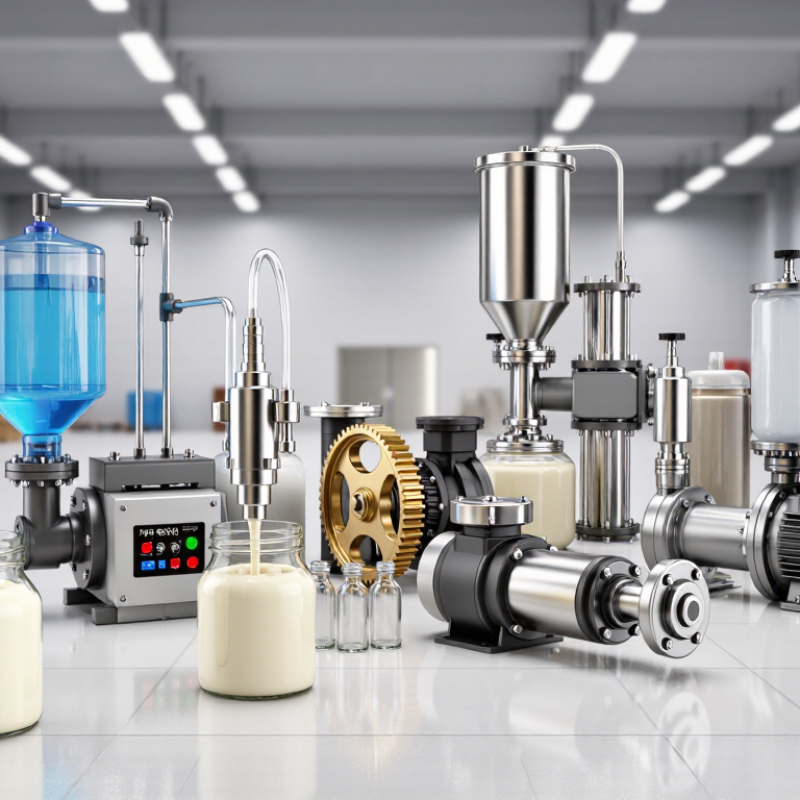
How Positive Displacement Pump Fillers Work
Positive displacement pump fillers move a measured volume of product during each pump cycle. Unlike gravity fillers, they do not depend mainly on liquid weight. A piston, gear, lobe, or diaphragm creates controlled displacement inside the pump chamber. The inlet valve opens, and product enters. The outlet valve then directs that volume into the container. This repeatable action supports accurate filling for sauces, creams, oils, and other viscous products.
In practical use, fill accuracy depends on more than the pump itself. Product temperature, viscosity, pressure, and air content can change the delivered volume. A cold cream may flow slowly, while a warmer batch may fill faster. Experienced operators check these conditions before adjusting stroke length or pump speed. Small changes matter. Calibration should use the actual product and container size. Sometimes, a perfect laboratory setting performs poorly on a busy production line. That is worth remembering.
Tips: Keep the suction line short and properly sealed. Inspect valves for residue or wear. Remove trapped air before calibration. Record fill weights at regular intervals, not only at startup. If accuracy drifts, check temperature and product consistency before blaming the pump. Gentle cleaning protects seals and reduces unexpected downtime. However, every formula behaves differently, so trial runs remain necessary.
Key Criteria for Evaluating Pump Fillers in 2026
A reliable positive displacement filler begins with repeatable dosing, not a glossy specification sheet. PMMI’s 2024 packaging machinery outlook reported continued automation investment across North American plants. That trend makes control quality essential. Evaluate fill accuracy across low, medium, and high viscosity products. A syrup may leave a clean piston stroke, while lotion can cling inside a valve. Test both.
Measure real production behavior. Record fill-weight variation, changeover time, cleaning water, and rejected containers. ISO 5725 offers a useful framework for evaluating measurement accuracy and repeatability. In practice, a filler holding ±0.5% may outperform one claiming tighter accuracy but requiring constant adjustment.
Small details matter. Watch the nozzle drip.
Hygienic design deserves equal attention. Inspect dead legs, seals, welds, and drainability before purchase. EHEDG guidance emphasizes cleanable equipment and hygienic construction, especially where residues can collect. Verify compatible materials, documented cleaning procedures, and accessible contact parts. Servo control can improve timing, but it cannot repair poor product testing. That is an easy mistake.
Also compare the machine’s data output with your plant system. Useful records include batch counts, alarm history, fill deviations, and maintenance intervals. A lower purchase price may become expensive when operators need frequent manual correction. Yet projected savings should be treated cautiously; supplier estimates rarely match every factory’s conditions.
10 Best Positive Displacement Pump Fillers for 2026
Choosing the 10 Best Positive Displacement Pump Fillers for 2026 requires more than comparing advertised speed. These machines must handle thick creams, sauces, gels, and particulate products without damaging texture. In production trials, I look closely at fill accuracy, changeover time, cleaning access, and performance at different temperatures.
Grand View Research estimates the global filling machine market will expand steadily through 2030, supported by automation and stricter packaging demands. MarketsandMarkets also identifies flexible, high-accuracy filling systems as a growing priority for modern processors. These findings support a practical shortlist: servo-driven piston fillers, gear-pump systems, rotary lobe fillers, peristaltic options, and compact systems for smaller batches. The best choice depends on viscosity, container shape, target volume, and daily output.
Accuracy matters most.
A strong positive displacement filler should maintain repeatable dosing when product flow changes. Hygienic stainless-steel construction, tool-free parts, and programmable recipes can reduce waste during frequent product changes. However, published speed claims often reflect ideal laboratory conditions. Real factories face foam, temperature drift, uneven ingredients, and tired operators. I would not rank any filler without checking its test results on the actual product. That step is sometimes skipped, and it can make a polished buying decision look weaker later. For 2026, the most credible selections combine measurable accuracy, accessible maintenance, validated cleaning procedures, and dependable support documentation.
Comparing Filler Types, Features, and Applications
Choosing among the 10 best positive displacement pump fillers requires more than comparing output rates. Each filler type handles product texture, container size, and cleaning demands differently. Piston fillers suit thick creams, sauces, and pastes because they deliver measured volumes with strong repeatability. Gear pump fillers provide steady flow for oils, lotions, and other low to medium viscosity liquids. Rotary lobe pumps handle delicate products with reduced shear, although their larger footprint can complicate compact production lines.
Peristaltic fillers isolate the product inside flexible tubing. This design supports hygienic processing and quick product changeovers. It also limits cleaning contact with internal pump parts. However, tubing wear can affect accuracy and create unexpected maintenance costs. Servo-driven systems improve control through adjustable speed and programmable dosing. They are useful when one line fills several container sizes. Still, advanced controls cannot correct poor calibration or unstable product temperature.
Application conditions should guide the final choice. Food processors may prioritize gentle handling, washdown access, and corrosion-resistant construction. Cosmetic operations often need smooth dosing for viscous gels and creams. Pharmaceutical environments demand documented calibration, traceability, and carefully controlled sanitation. During line trials, measure actual fill weight at startup and after extended running. Small errors become expensive across thousands of containers. No filler is perfect. A piston system may outperform a gear pump for one formula, then struggle after viscosity changes. That detail is easy to overlook. Compare accuracy, maintenance access, shear, changeover time, and total operating cost before ranking each machine.
How to Choose a Pump Filler for Your Production Needs
10 Best Positive Displacement Pump Fillers for 2026
Choosing a pump filler starts with the product, not the machine brochure. Measure viscosity, particle size, temperature, foam, and target dose. A thick sauce may need a lobe pump, while lotions often suit progressive cavity technology. In plant trials, I watch the nozzle during startup and shutdown. Drips matter. So does the final 100 bottles. PMMI’s 2024 State of the Industry report valued U.S. packaging machinery shipments at about $11.3 billion in 2023, showing how seriously manufacturers invest in reliable automation.
Accuracy is only one selection factor. Ask about cleanability, changeover time, servo control, and spare-part access. A filler that reaches 60 containers per minute may still lose money if cleaning takes two hours. Product-contact materials should match the formula and sanitation process. Hygienic design guidance from EHEDG emphasizes minimizing dead spaces and improving drainability. That detail can protect quality, although real production conditions often expose weaknesses that laboratory tests miss.
Tips: Request samples from your actual product batch. Test the slowest and fastest planned speeds. Record fill-weight variation across at least several cycles. Check whether the pump handles temperature changes without surging. Keep a small reserve for future container sizes. I would also challenge the supplier’s “maintenance-free” claim; every pump needs inspection, seals eventually wear, and operators need practical training.
| Filler Type | How It Meters Product | Typical Product Fit | Key Advantages | Considerations | Best Suited To |
|---|---|---|---|---|---|
| Servo-Driven Piston Filler | A servo moves a piston through a measured stroke to draw in and dispense a set volume. | Liquids, creams, pastes, sauces, and products with suspended particles, depending on valve and nozzle design. | Adjustable dosing, repeatable strokes, and straightforward recipe changes; can handle a broad range of product consistencies. | Piston, seals, and product-contact valves need cleaning and maintenance. Product particles must be compatible with the selected passage size. | Production lines needing flexible volumetric filling across multiple container sizes or product recipes. |
| Rotary Piston Filler | Rotating pistons draw product into cylinders and dispense it through a timed valve arrangement. | Free-flowing to moderately viscous liquids and some products with small, soft particulates. | Can support continuous, multi-head operation and consistent volumetric dosing at production-line speeds. | Valve timing and change parts must match the product. Larger or delicate particulates may require a different pump design. | High-throughput applications with established product recipes and frequent container filling. |
| Gear Pump Filler | Meshing gears carry product from the inlet to the outlet in controlled volumes as they rotate. | Low- to high-viscosity, relatively homogeneous liquids such as oils, syrups, and some gels. | Compact design, steady flow, and convenient integration with speed-controlled filling systems. | Close clearances can be sensitive to abrasive particles. Some products may experience more shear than with gentler pump types. | Metering smooth, particle-free products where a compact, controllable pump is useful. |
| Rotary Lobe Pump Filler | Rotating lobes move product through the pump chamber with relatively low internal shear. | Viscous products and products containing soft or delicate particulates, subject to lobe and clearance selection. | Gentle handling, reversible flow on many designs, and access for cleaning on suitable sanitary models. | May require careful priming and speed control. Pulsation and volumetric accuracy depend on pump design, product, and system setup. | Food, personal-care, and other processes where gentle transfer and cleanability are priorities. |
| Progressive Cavity Filler | A helical rotor moves product through a progressing series of sealed cavities in the stator. | High-viscosity, shear-sensitive, or particle-bearing products, depending on the pump configuration. | Continuous, relatively low-pulsation flow and good handling of challenging product consistencies. | The stator is a wear component and must be compatible with the product and cleaning process. Dry running can damage some designs. | Controlled filling of thick pastes, creams, and products that are difficult to move with conventional pumps. |
| Peristaltic Pump Filler | Rollers or shoes compress flexible tubing to move a measured amount of product through the tube. | Low- to moderate-viscosity liquids, including some sensitive or sterile products. | Product contacts the tubing rather than the pump mechanism; tubing can be changed between products or batches. | Tubing is a consumable and can wear or fatigue. Maximum pressure, flow, and product compatibility depend on the tubing. | Small-batch, hygienic, or contamination-sensitive filling where quick product-contact changeover is valuable. |
| Diaphragm Pump Filler | A flexible diaphragm moves back and forth to displace product through inlet and outlet check valves. | Low- to moderate-viscosity liquids and some chemically aggressive products with compatible wetted materials. | Product can be isolated from the drive mechanism, and material options can suit a range of chemical requirements. | Check valves may restrict products with particles. Reciprocating action can create pulsating flow unless managed by the system. | Applications where material compatibility and separation from the drive are important. |
| Twin-Screw Pump Filler | Intermeshing screws convey product through the pump in controlled cavities. | A range of viscosities, including some products with particulates, depending on screw profile and operating conditions. | Can provide steady transfer and may handle both lower- and higher-viscosity products on appropriately designed systems. | System cost and setup can be higher than simpler pump options. Product, cleaning method, and operating range must be matched to the design. | Lines that need one pump platform to accommodate varied products or process-transfer requirements. |
| Rotary Vane Pump Filler | Sliding vanes in a rotating rotor form chambers that expand and contract to move product. | Primarily clean, homogeneous liquids such as oils and other lubricating fluids. | Compact construction and smooth delivery for suitable liquids. | Vane materials and clearances must suit the product. Abrasive particles and some highly viscous products can increase wear or reduce performance. | Filling clean liquids where a compact rotary metering pump is appropriate. |
| Precision Syringe Pump Filler | A motor-driven plunger dispenses a defined volume from a syringe or metering cylinder. | Low-volume liquids and carefully controlled doses, including some viscous products when properly configured. | Fine control at small fill volumes and programmable dispense profiles. | Typically better suited to lower-throughput tasks than bulk filling. Syringe size, seals, and product compatibility limit the operating range. | Laboratory, pilot, specialty, and small-dose production applications. |
Selection note: Performance, fill accuracy, throughput, and cleanability vary with pump geometry, product properties, nozzle design, controls, and operating conditions. Confirm product compatibility and test the intended container and fill volume with the equipment supplier before purchase.
FAQS
A pump chamber moves a measured volume during each cycle. Product enters through an inlet, then exits through an outlet into the container.
They can fill sauces, creams, oils, gels, and other viscous products. Particle size and texture still matter.
Temperature, viscosity, pressure, and trapped air can change the delivered volume. A cold cream may flow more slowly. Small changes matter.
Calibrate it with the actual product and container size. Remove trapped air, then record fill weights across repeated cycles.
Check product temperature and consistency before changing pump settings. Inspect valves for residue or wear, and look for leaks in the suction line.
Consider accuracy, cleaning access, changeover time, maintenance, and spare-part availability. Advertised speeds may not reflect a busy production line.
Run trials with a real product batch. Test planned speeds and inspect fill weights across several cycles. The last few containers can reveal problems.
Yes. Inspect valves and seals, clean gently, and train operators. “Maintenance-free” sounds convenient, but it deserves a closer look.
Conclusion
Positive Displacement Pump Fillers are designed to move a measured volume of product with each pumping cycle, making them a practical choice for consistent, repeatable filling. This overview explains how these machines work and the key factors to assess in 2026, including filling accuracy, product characteristics, output requirements, changeover needs, cleaning, and ease of operation.
The article reviews ten types of positive displacement pump fillers and compares their features, strengths, and suitable applications. It also considers how different pump designs perform with products of varying viscosity and production demands. By weighing equipment capabilities against line speed, container formats, maintenance needs, and future growth, manufacturers can identify a filler that fits their process and supports dependable production.

Blog Tags: